
business
Adovivo Com: The Emerging Digital Ecosystem Shaping Modern Business Growth


The modern digital economy rewards businesses that can move quickly, adapt intelligently, and maintain meaningful connections with customers in an increasingly crowded online world. In this environment, platforms and concepts that simplify digital operations naturally attract attention. Adovivo com is emerging as one of those names generating curiosity among startup founders, entrepreneurs, and tech professionals searching for smarter approaches to online growth.
As digital transformation accelerates across industries, businesses are facing a new reality. Success is no longer determined solely by having a website or social media presence. Companies must now manage integrated digital experiences that combine branding, communication, analytics, automation, and customer engagement into a seamless ecosystem.
This shift explains why concepts and platforms associated with efficiency and adaptability are gaining momentum. Adovivo com reflects a broader movement toward connected digital infrastructure designed for the speed and complexity of modern business operations.
For entrepreneurs navigating competitive markets, understanding the significance of platforms like adovivo com offers valuable insight into where digital business strategy is heading next.
Why Adovivo Com Reflects a Larger Digital Transformation
The internet has evolved dramatically over the last two decades. Early online businesses focused primarily on visibility. A functional website and a few online advertisements were often enough to attract customers and maintain growth.
Today, the digital landscape is far more sophisticated. Consumers expect personalized experiences, instant communication, seamless interfaces, and responsive customer support across every channel. Businesses that fail to meet these expectations quickly lose relevance.
Adovivo com appears within this context of accelerating digital expectations. It represents the growing demand for systems that help businesses simplify complexity while remaining scalable and adaptable.
Many companies currently operate with fragmented infrastructures that rely on disconnected tools for marketing, analytics, customer management, and workflow coordination. This fragmentation often creates inefficiencies that slow decision-making and weaken customer experiences.
Modern businesses are increasingly moving toward unified ecosystems where communication, automation, and performance tracking work together in real time. Platforms associated with this approach are becoming central to digital growth strategies.
The rise of adovivo com reflects the broader understanding that operational simplicity can become a powerful competitive advantage.
The Startup Perspective on Adovivo Com
Startups operate differently from traditional corporations. Founders rarely have the luxury of large budgets, complex departments, or extended timelines for experimentation. They need systems that support rapid execution while remaining cost-effective and flexible.
This is one reason concepts like adovivo com resonate strongly within entrepreneurial communities. Startups are naturally drawn toward platforms and strategies that streamline operations without sacrificing scalability.
The modern startup environment is heavily influenced by lean methodology. Businesses launch quickly, test ideas in real time, gather user feedback, and iterate continuously. Speed matters because digital markets evolve rapidly.
However, speed alone is not enough. Startups also need operational clarity. Many growing companies struggle because their internal systems become too complicated too quickly. Teams lose productivity when communication is fragmented and workflows lack integration.
Adovivo com reflects the increasing emphasis on connected ecosystems that reduce friction across operations. Entrepreneurs are prioritizing digital infrastructure that supports collaboration, automation, and intelligent decision-making.
The ability to remain agile while scaling efficiently has become one of the defining characteristics of successful startups.
Adovivo Com and the Demand for Simpler Digital Systems
One of the most important trends in modern technology is the movement toward simplicity. Businesses and consumers alike are becoming less tolerant of complicated systems that require excessive management or technical expertise.
Adovivo com aligns with this broader shift toward intuitive digital experiences. The most successful platforms today are often those that reduce operational complexity while still offering powerful functionality.
This principle applies across industries. Whether businesses are managing marketing campaigns, customer relationships, or internal workflows, the goal is increasingly the same: create systems that feel seamless and efficient.
Complexity often creates hidden costs. Employees spend more time navigating software rather than completing meaningful work. Customers become frustrated by inconsistent experiences. Leadership teams struggle to gain unified visibility into performance.
Simplified ecosystems solve many of these issues by centralizing operations and improving communication flow.
The following table highlights how integrated digital ecosystems compare with traditional fragmented systems.
| Business Function | Traditional Approach | Integrated Ecosystem Approach |
|---|---|---|
| Communication | Multiple isolated tools | Unified collaboration systems |
| Customer Experience | Inconsistent interactions | Seamless digital engagement |
| Analytics | Separate reporting platforms | Centralized real-time insights |
| Workflow Management | Manual coordination | Automated process integration |
| Scalability | Operational bottlenecks | Flexible growth infrastructure |
This shift toward integrated simplicity explains why digital ecosystems connected to operational efficiency continue gaining attention across industries.
The Role of Data in the Adovivo Com Ecosystem
Data has become one of the most valuable assets in the digital economy. Businesses today rely on analytics not only to track performance but also to predict trends, optimize strategies, and improve customer engagement.
Adovivo com exists within this broader movement toward data-driven business operations. Modern companies no longer want delayed reporting or disconnected analytics systems. They need real-time insights capable of supporting rapid decision-making.
Artificial intelligence and automation have accelerated this transformation significantly. Businesses can now analyze customer behavior patterns, automate repetitive tasks, and personalize user experiences more effectively than ever before.
However, raw information alone is not enough. The real advantage comes from transforming data into actionable intelligence.
Integrated ecosystems help businesses achieve this by connecting operational workflows directly to analytics systems. Instead of relying on isolated reports, organizations can respond dynamically to changing conditions.
For startups especially, access to clear and usable insights can dramatically improve strategic agility. Companies capable of adapting quickly to customer behavior often outperform larger competitors constrained by slower decision-making processes.
This focus on connected intelligence is shaping the next generation of digital infrastructure.
Adovivo Com and the Evolution of Customer Experience
Customer expectations have changed dramatically in recent years. Consumers now interact with businesses across multiple platforms simultaneously, from websites and mobile applications to social media and messaging systems.
As a result, consistency has become essential. Customers expect smooth experiences regardless of where or how they engage with a brand.
Adovivo com reflects the growing emphasis on creating connected customer journeys rather than isolated interactions. Businesses increasingly understand that every touchpoint contributes to overall brand perception.
A slow website, delayed response, or fragmented support system can weaken customer trust almost instantly. On the other hand, seamless experiences build loyalty and encourage long-term engagement.
This shift has pushed companies to rethink how digital systems are structured. User-centered design and operational efficiency are no longer separate priorities. They are deeply interconnected.
The most effective digital ecosystems are those that make technology feel invisible. Customers focus on value and experience rather than navigating technical barriers.
Adovivo com symbolizes this movement toward frictionless digital interaction and more responsive customer engagement strategies.
Leadership and Operational Strategy in the Age of Adovivo Com
The rise of integrated digital ecosystems is also transforming leadership itself. Traditional management models built around rigid hierarchies are becoming less effective in fast-moving digital environments.
Modern organizations require leaders capable of balancing innovation with operational clarity. Communication, adaptability, and strategic alignment are now more important than centralized control.
Adovivo com reflects this evolution in business strategy. Companies increasingly rely on collaborative ecosystems where information flows quickly between departments and decision-making becomes more agile.
Remote work and distributed teams have further accelerated this shift. Businesses can no longer depend solely on physical office environments for coordination and productivity.
Instead, digital infrastructure has become the foundation of organizational culture and collaboration. Leaders must now focus on building systems that support flexibility without sacrificing efficiency.
Organizations capable of adapting quickly to changing market conditions are often the ones best positioned for long-term growth.
The Future Outlook for Adovivo Com
The future of digital business will likely revolve around connected ecosystems that combine automation, analytics, and human-centered design into unified operational environments.
Adovivo com appears closely aligned with these long-term trends. As industries continue evolving, businesses will place even greater emphasis on scalability, simplicity, and intelligent integration.
Artificial intelligence will likely play a larger role in shaping these ecosystems. Predictive analytics, automated workflows, and adaptive customer experiences are already becoming standard components of digital operations.
At the same time, businesses must remain focused on usability. Technology only creates value when it improves real-world experiences for both employees and customers.
The companies that thrive in the coming years will likely be those capable of balancing innovation with clarity. Systems that simplify operations while supporting continuous growth will become increasingly valuable.
Adovivo com reflects this broader movement toward sustainable digital transformation built around efficiency, adaptability, and connected experiences.
Conclusion
The emergence of adovivo com highlights a larger transformation happening across the digital economy. Businesses are moving away from fragmented systems and toward integrated ecosystems designed to support smarter growth, streamlined operations, and stronger customer experiences.
For startup founders, entrepreneurs, and technology professionals, this shift represents both an opportunity and a strategic necessity. Companies that prioritize adaptability, operational clarity, and connected digital infrastructure are more likely to remain competitive in rapidly changing markets.
Adovivo com symbolizes the modern demand for scalable systems that reduce complexity while enhancing performance. As digital transformation continues accelerating, businesses that embrace intelligent integration and human-centered design will help shape the future of innovation.

So there I was, deep in a rabbit hole at 1 a.m., after a friend dropped the word “nelonium” in a group chat like it was the most obvious thing in the world.
I stared at my screen. Nelonium. I’d never heard of it. And I work in tech content — I cover materials, energy, engineering. My immediate reaction was embarrassment, followed quickly by curiosity. Was this something I’d somehow missed? A classified project that leaked? Or just… hype?
I spent the next few weeks genuinely digging into it — reading research threads, forums, tech blogs, and reaching out to a couple of people who work in advanced materials manufacturing. And honestly? What I found was more interesting than a straightforward answer.
Let me walk you through everything.
What Exactly Is Nelonium?
Here’s where it gets fascinating — and a little uncomfortable if you’ve been confidently referencing it in conversations.
Nelonium is not a verified, lab-confirmed, peer-reviewed material. At least not yet. It doesn’t have an entry in the periodic table. No scientific journal has published a definitive synthesis paper on it. The official word from materials science bodies? Silence.
What nelonium is, is a concept — and a powerful one.
It emerged from speculative tech communities, futurist brainstorming forums, and advanced materials research discussions as a kind of shorthand for the “perfect material.” Think about it this way: engineers have been chasing a material that’s simultaneously stronger than steel, lighter than aluminum, thermally stable at extreme temperatures, electrically conductive, and corrosion-resistant. Nelonium is the name that got attached to that dream.
Some sources describe it as a next-generation engineered material with a unique molecular structure. Others frame it as a conceptual framework — a placeholder name for properties we’re still figuring out how to combine in a single substance.
One site I came across described it bluntly: nelonium is a hypothetical advanced material — stronger than steel, lighter than aluminum, highly durable, and potentially capable of super-efficient energy handling. It grew organically through speculative tech narratives and online forums, borrowing scientific naming conventions to give it a ring of legitimacy.
That’s a fascinating thing to sit with. A word that sounds scientific became so widely used that people started treating it as real.
Why Are So Many Sites Writing About It?
This was the second thing I noticed during my research. Search nelonium and you’ll find dozens of articles, all written with total confidence, describing its molecular structure, heat resistance specs (apparently it stays stable above 1,200°C, compared to aluminum which weakens around 600°C), and industrial applications from aerospace to renewable energy.
Some of these articles are clearly SEO-driven. They’re riding the curiosity wave — and honestly, it works, because people are searching for it.
But here’s what’s real underneath all that: the properties being attributed to nelonium are grounded in actual materials science research. Scientists really are working on:
- High-strength composites that outperform traditional metals at a fraction of the weight
- Thermally stable ceramics and alloys that don’t break down under extreme heat
- Next-gen battery materials with faster charge cycles and longer lifespans
- Biocompatible materials for medical implants that the body won’t reject
Nelonium, whether real or not, is serving as a useful narrative vessel for all of this ongoing research. It’s a name that’s capturing the public imagination around problems engineers are genuinely trying to solve.
The Properties People Attribute to Nelonium (And What’s Real)
Let me break down what you’ll commonly hear about nelonium, and where the actual science stands.
1. Exceptional Strength-to-Weight Ratio
This is probably the most-cited property. Nelonium is supposedly much stronger than traditional alloys while being significantly lighter.
What’s real: Materials like carbon fiber composites, titanium alloys, and graphene-based materials are already pushing these boundaries. Researchers using selective laser melting (a form of additive manufacturing) can now produce metal components that are 99.8% dense — matching traditionally forged parts in strength while opening up new design possibilities.
2. Thermal Resistance Beyond 1,200°C
Traditional aluminum starts to fail around 600°C. Nelonium, according to the hype, stays stable well above that.
What’s real: Ceramic matrix composites (CMCs) already operate in this range. They’re used in jet engine components right now. The gap between what nelonium promises and what current materials already deliver is narrower than most people think.
3. Excellent Electrical Conductivity
The idea that nelonium could make microchips faster and help devices run cooler is compelling.
What’s real: Graphene remains the frontrunner here — it conducts electricity better than copper and is technically just one atom thick. The challenge is scalable manufacturing, which is still being figured out.
4. Corrosion Resistance
Unlike metals that rust, nelonium supposedly doesn’t degrade under harsh environmental conditions.
What’s real: Titanium, certain polymer composites, and advanced ceramic coatings already do this. The marine industry and aerospace sector use these materials extensively.
Where the Nelonium Idea is Actually Useful
I’ll be honest — when I first figured out that nelonium wasn’t a confirmed material, I felt a little deflated. Like I’d been excited about something that wasn’t really there.
But then I changed my perspective.
The concept of nelonium is doing something useful in the public conversation around materials science. It’s giving non-engineers a mental hook for caring about advanced materials research. It’s making people curious about battery tech, aerospace composites, and renewable energy materials in a way that a dry academic paper title never would.
There’s historical precedent for this. “Unobtanium” — yes, that word from Avatar — actually predates the movie and was used by aerospace engineers as slang for a material with ideal but currently unachievable properties. It made the conversations easier. Nelonium is filling a similar role in 2025–2026 online discourse.
And honestly? Some brands are already marketing products using the nelonium name — likely because it sounds innovative and signals forward-thinking to a consumer base that’s increasingly interested in next-gen materials. Is that misleading? Sometimes, yes. But the underlying intent — communicating that something is built with superior material engineering — isn’t entirely empty.
How to Talk About Nelonium Without Looking Silly
If you’re a content creator, a product marketer, or just someone who got excited about this in a conversation — here’s practical advice.
Don’t present it as a confirmed, synthesized material. If you do, someone with a materials science background will correct you, and it won’t be fun.
Do frame it as a concept or an emerging category. Saying “materials with nelonium-like properties are being actively developed” is accurate and still exciting.
Use it as a starting point for deeper conversations. Talk about graphene. Talk about carbon fiber composites. Talk about what selective laser melting is doing for metal manufacturing. Those are real stories with real stakes.
If you’re in marketing: Lean into what your product actually does. If the materials in your product are genuinely advanced, describe those properties — don’t just slap a speculative term on it and hope people don’t notice.
What Real Researchers Are Actually Working On
Since nelonium is (so far) a concept, not a lab-confirmed substance, it’s worth knowing what actual next-gen materials research looks like in 2026.
Graphene composites are probably the most developed in this space. They’re already in sporting goods, some electronics components, and experimental aerospace structures. The challenge remains cost and scalable production.
High-entropy alloys (HEAs) are a genuinely exciting development — these are alloys made from five or more principal elements in roughly equal proportions, giving them properties no single-element metal can match. Research labs in Europe and the US are publishing serious findings on these.
Boron nitride nanomaterials are being explored as an insulating counterpart to graphene — same structure, different electrical behavior. Incredibly useful for electronics.
Metamaterials — engineered at the nanoscale to have properties that don’t naturally exist — are being explored for everything from acoustic dampening to electromagnetic shielding.
None of these have the catchy, punchy name that “nelonium” does. But they’re real, they’re advancing, and they’re delivering on many of the promises that nelonium represents in the public imagination.
The Mistake I Almost Made (And That Many People Are Making)
When I first started researching this, I almost wrote a confident explainer on “nelonium’s properties and applications” — citing the specs I’d read without questioning them. The high temperature resistance, the conductivity numbers, the biocompatibility claims.
That would have been lazy, and wrong.
The internet is currently full of articles that treat nelonium as a real, established material. They’re getting clicks, probably ranking well, and spreading a kind of soft misinformation — not malicious, but careless. People share those articles and the concept calcifies into “fact.”
The more honest and actually more interesting story is the one I’ve told here: nelonium is a concept, it reflects real material science ambitions, and some of what it describes is already being built — just under different names and in different labs.
That nuance is what separates useful content from hype.
Final Thoughts
If someone asks you about nelonium at a dinner party, you can now give the kind of answer that makes people lean in rather than glaze over.
It’s speculative. It’s fascinating. It’s pointing at real science. And whether it becomes a confirmed, synthesized material in five years or remains a conceptual symbol for the next generation of engineered substances — it’s clearly touched a nerve in how people think about the future of materials.
That’s not nothing. That’s actually kind of powerful.
And the next time a word shows up in your group chat that you’ve never heard before? Don’t assume you missed something. Sometimes the most interesting answer is “nobody fully knows yet.

Social media has evolved from a communication platform into one of the most powerful business ecosystems in the world. Brands launch products on Instagram before they reach retail shelves. Startups build global communities without physical offices. Influencers shape purchasing decisions faster than traditional advertising campaigns ever could. In this environment, data has become the driving force behind digital success, and tools like gramhir pro are increasingly gaining attention for their role in social media analytics and strategic audience intelligence.
For entrepreneurs, startup founders, marketers, and technology professionals, gramhir pro represents more than a social media analytics platform. It reflects the broader transformation of digital marketing into a data-driven discipline where audience behavior, engagement metrics, and performance insights shape nearly every strategic decision.
Modern businesses no longer rely on intuition alone. They rely on measurable patterns, predictive analytics, and real-time audience understanding.
That is where gramhir pro enters the conversation.
Understanding the Purpose of Gramhir Pro
At its core, gramhir pro is associated with social media analytics and profile evaluation tools designed to help users better understand digital engagement patterns, account performance, audience interaction, and online visibility.
The rapid growth of platforms like Instagram transformed social media from a casual networking environment into a competitive marketplace. Businesses now compete not only for customers but also for attention.
In this attention-driven economy, understanding audience behavior is essential.
Gramhir pro reflects the increasing demand for platforms capable of analyzing social media activity beyond surface-level metrics. Likes and follower counts alone no longer provide meaningful insight. Businesses need deeper visibility into engagement quality, audience demographics, performance trends, and content effectiveness.
This shift has transformed analytics from a marketing accessory into a core business necessity.
Why Gramhir Pro Matters in Modern Digital Strategy
Digital marketing has become one of the most measurable industries in the business world. Every click, interaction, impression, and engagement can now be tracked and analyzed.
However, raw data alone has limited value.
Businesses need tools capable of turning information into actionable insight. Gramhir pro matters because it aligns with this growing emphasis on intelligent social media analytics.
For startups and entrepreneurs, understanding audience behavior can significantly influence growth strategies. Data-driven marketing allows businesses to:
- Identify high-performing content
- Understand audience engagement patterns
- Improve targeting accuracy
- Optimize campaign timing
- Track competitor activity
- Refine branding strategies
In highly competitive digital markets, these insights can provide a major strategic advantage.
The companies succeeding on social media today are often those capable of interpreting audience behavior more effectively than their competitors.
The Evolution of Social Media Analytics
To understand the significance of gramhir pro, it helps to examine how social media analytics evolved over time.
In the early stages of social media marketing, success was often measured through vanity metrics such as follower counts or basic engagement totals.
As platforms matured, businesses realized those numbers rarely reflected actual business performance.
A large audience does not automatically translate into trust, conversions, or revenue.
Modern analytics platforms now focus on deeper operational intelligence, including:
- Audience retention patterns
- Engagement consistency
- Reach efficiency
- Content interaction quality
- Audience behavior forecasting
Gramhir pro reflects this broader industry transition from superficial visibility metrics toward strategic digital intelligence.
This evolution has fundamentally changed how brands approach online growth.
Key Features Associated With Gramhir Pro
While analytics tools vary in structure and functionality, gramhir pro is commonly associated with several important capabilities relevant to modern digital strategy.
Audience Engagement Analysis
One of the most valuable aspects of modern analytics platforms is engagement analysis.
Businesses need to understand not only how many people interact with content but also how meaningful those interactions are. Engagement quality often reveals more about audience loyalty than simple follower counts.
Analytics systems help identify:
- Which posts generate the strongest responses
- What content formats perform best
- How audiences interact over time
- Which demographics engage most actively
This information helps businesses refine communication strategies more effectively.
Content Performance Tracking
Content is one of the most important assets in digital marketing, but performance varies significantly between posts, formats, and campaigns.
Gramhir pro-style analytics systems provide insight into which content types generate the strongest results.
This allows brands to optimize:
- Posting frequency
- Content style
- Audience targeting
- Visual branding strategies
- Engagement timing
Data-driven optimization improves marketing efficiency and reduces wasted effort.
Competitor Intelligence
Competitive analysis has become increasingly important in social media strategy.
Businesses often monitor competitor performance to understand industry trends, audience preferences, and emerging marketing approaches.
Analytics platforms can reveal patterns such as:
- Content engagement trends
- Growth consistency
- Audience interaction styles
- Posting strategies
This helps organizations position themselves more effectively within crowded digital markets.
Performance Forecasting
Modern analytics increasingly incorporate predictive capabilities powered by artificial intelligence and machine learning.
Instead of only reporting past performance, platforms now help forecast future trends based on historical behavior patterns.
This predictive approach allows businesses to make more proactive marketing decisions.
Traditional Marketing vs Analytics-Driven Marketing
The differences between traditional marketing approaches and analytics-driven digital strategies highlight why tools like gramhir pro have become so important.
| Traditional Marketing Approach | Analytics-Driven Strategy |
|---|---|
| Broad audience targeting | Precision audience segmentation |
| Limited campaign measurement | Real-time performance tracking |
| Intuition-based decisions | Data-driven optimization |
| Delayed market feedback | Instant engagement insights |
| Static branding strategies | Adaptive content refinement |
| Manual reporting systems | Automated analytics dashboards |
This transformation reflects how marketing itself has evolved into a highly technical discipline.
The Role of Artificial Intelligence in Gramhir Pro
Artificial intelligence is reshaping the entire analytics industry.
Modern social media platforms generate enormous amounts of behavioral data every second. Human teams alone cannot process this information efficiently.
AI-powered systems help platforms like gramhir pro identify patterns, trends, and predictive insights far more quickly than traditional analysis methods.
AI contributes to:
- Audience behavior forecasting
- Engagement trend analysis
- Content optimization recommendations
- Sentiment analysis
- Automated reporting systems
This creates more adaptive and responsive marketing environments.
As AI technology continues advancing, analytics platforms will likely become even more predictive and personalized.
Why Startups Benefit From Platforms Like Gramhir Pro
Startups often operate with limited budgets and intense competition. Unlike large corporations, they cannot afford inefficient marketing strategies or poorly targeted campaigns.
This makes analytics especially valuable.
Platforms associated with gramhir pro help startups make more informed decisions using measurable audience data rather than assumptions.
Benefits for startups include:
- Improved audience targeting
- Better resource allocation
- Faster brand optimization
- More effective content strategies
- Increased engagement efficiency
For early-stage companies, these advantages can significantly improve growth potential.
In crowded digital markets, understanding audience behavior can become a decisive competitive advantage.
Challenges of Social Media Analytics
Despite its advantages, analytics-driven marketing also presents several challenges.
One major issue is data overload. Businesses often collect more information than they can effectively interpret. Without strategic clarity, analytics can create confusion instead of insight.
Privacy concerns also continue growing across the digital marketing industry. Consumers increasingly expect transparency regarding how their data is collected and used.
Another challenge involves over-optimization. Some brands become so focused on metrics that they lose authenticity in their communication.
Successful digital marketing requires balancing analytics with human creativity and emotional intelligence.
Data can guide strategy, but it should not completely replace genuine brand identity.
Gramhir Pro and the Future of Digital Influence
The future of digital marketing will likely become even more data-driven and personalized.
As social platforms evolve, businesses will increasingly rely on predictive analytics, AI-supported engagement systems, and adaptive content strategies.
Gramhir pro reflects this broader movement toward intelligent social media ecosystems where marketing decisions are continuously refined through real-time audience insight.
In the future, businesses may rely on analytics systems capable of:
- Predicting viral content trends
- Personalizing campaigns automatically
- Forecasting engagement behavior
- Optimizing communication in real time
This evolution will continue reshaping how brands interact with digital audiences.
The Human Side of Analytics
Despite all technological advancements, successful marketing remains deeply human.
People engage with brands that feel authentic, relatable, and trustworthy. Analytics can identify patterns, but human creativity still shapes emotional connection.
Gramhir pro reflects the balance between technology and human understanding.
The most successful businesses use analytics not to manipulate audiences but to better understand their needs, interests, and behaviors.
This distinction matters.
Technology should strengthen communication, not replace meaningful interaction entirely.
Conclusion
Gramhir pro represents the growing importance of intelligent social media analytics in today’s digital economy. As businesses compete for visibility, engagement, and audience trust, data-driven strategy has become essential for sustainable growth.
The rise of analytics platforms reflects a broader transformation in digital marketing—from intuition-based campaigns toward measurable, adaptive, and highly targeted communication systems.
For startups, entrepreneurs, and technology professionals, understanding tools like gramhir pro is increasingly important. Social media success today depends not only on creativity but also on the ability to interpret audience behavior and respond strategically.
As artificial intelligence and predictive analytics continue evolving, the future of digital marketing will likely become even more intelligent, personalized, and interconnected.
Businesses that embrace this transformation early may gain a powerful advantage in the next era of digital influence.

The modern business world is evolving faster than ever before. Startups scale globally within months, artificial intelligence reshapes operational strategies, and digital ecosystems increasingly determine whether companies succeed or disappear. In this rapidly changing environment, new frameworks and conceptual models are emerging to help organizations adapt. Among these evolving ideas, aponeyrvsh is beginning to attract attention as a forward-looking approach to intelligent digital transformation.
For entrepreneurs, startup founders, and technology professionals, aponeyrvsh represents more than a technical concept. It reflects a larger shift in how businesses think about infrastructure, automation, scalability, and interconnected systems. The companies leading today’s economy are no longer simply building products. They are creating intelligent ecosystems capable of learning, adapting, and evolving continuously.
Aponeyrvsh captures this transition toward operational intelligence and connected digital strategy.
As competition becomes more global and customer expectations continue rising, businesses must move beyond fragmented systems and isolated workflows. The future belongs to organizations capable of integrating technology, communication, analytics, and customer experience into a unified operational environment.
That is the core philosophy behind aponeyrvsh.
Understanding the Core Idea Behind Aponeyrvsh
At its foundation, aponeyrvsh can be understood as a modern digital framework focused on intelligent integration and scalable adaptability. Rather than viewing business functions as separate departments operating independently, it promotes the idea of interconnected ecosystems where systems communicate and evolve together.
Traditional business structures often create silos. Marketing teams use one platform, operations teams use another, customer support relies on different software, and analytics remain disconnected from daily workflows.
Over time, this fragmentation creates inefficiency.
Aponeyrvsh challenges that outdated structure by encouraging businesses to build unified operational systems where information flows seamlessly between functions.
This creates several advantages:
- Faster decision-making
- Better collaboration between teams
- Improved scalability
- More accurate real-time insights
- Stronger customer experiences
The framework aligns naturally with modern technologies such as cloud computing, automation platforms, artificial intelligence, and predictive analytics.
Why Aponeyrvsh Matters in Today’s Digital Economy
The digital economy rewards adaptability above almost everything else.
Consumer behavior changes rapidly. Technology evolves constantly. Markets become more competitive every year. In this environment, businesses built on rigid systems often struggle to keep up.
Aponeyrvsh matters because it prioritizes flexibility and continuous optimization.
Organizations adopting interconnected systems can respond faster to change without rebuilding their infrastructure every time market conditions shift.
For startups, this is especially important. Young companies often operate under uncertainty where customer demands, product direction, and growth trajectories can change quickly. Flexible operational systems allow them to scale while remaining agile.
Established companies also benefit because integrated systems reduce friction and improve organizational visibility.
The businesses succeeding today are often those capable of adapting their operations as quickly as they adapt their products.
The Key Principles of Aponeyrvsh
Several foundational ideas define the aponeyrvsh framework and explain why it resonates with modern digital leaders.
Unified Operational Ecosystems
One of the central concepts behind aponeyrvsh is integration.
Modern businesses rely on numerous digital tools, but disconnected platforms create communication gaps and workflow inefficiencies. Aponeyrvsh promotes ecosystem thinking, where software, analytics, communication systems, and operational tools work together cohesively.
This creates stronger collaboration and improves organizational efficiency.
Instead of managing isolated systems, businesses operate within connected environments.
Intelligent Automation
Automation has become essential for scalability, but aponeyrvsh emphasizes intelligent automation rather than simple task replacement.
The goal is not to eliminate human involvement. Instead, automation should remove repetitive operational burdens while preserving human judgment and creativity.
For example:
- Automated reporting systems reduce manual workload
- Smart customer service tools improve response times
- Workflow automation streamlines approvals and scheduling
- Predictive systems identify operational bottlenecks early
This allows teams to focus on innovation and strategy instead of repetitive administration.
Scalable Digital Infrastructure
Many companies struggle because their systems are designed only for immediate needs rather than long-term growth.
Aponeyrvsh encourages businesses to build scalable digital infrastructure capable of adapting as the organization expands.
This includes:
- Flexible cloud-based systems
- Modular software architecture
- Adaptive operational workflows
- Expandable data systems
Scalability becomes increasingly important as businesses grow across markets and platforms.
Real-Time Data Intelligence
Modern organizations generate enormous amounts of data daily, but information has limited value without accessibility and interpretation.
Aponeyrvsh emphasizes real-time visibility across operational systems. Instead of relying on delayed reports, businesses gain continuous insight into performance, customer behavior, and operational trends.
This allows organizations to make faster and more informed decisions.
Traditional Operations vs Aponeyrvsh-Oriented Systems
The differences between older operational models and modern ecosystem-based approaches become increasingly visible in digital-first industries.
| Traditional Operational Systems | Aponeyrvsh-Oriented Systems |
|---|---|
| Disconnected software platforms | Unified digital ecosystem |
| Manual data transfers | Automated synchronization |
| Delayed reporting cycles | Real-time analytics |
| Departmental silos | Cross-functional collaboration |
| Reactive operational planning | Predictive decision-making |
| Fixed infrastructure | Scalable adaptive systems |
This shift is not merely technical. It represents a complete transformation in how organizations operate and compete.
The Role of Artificial Intelligence in Aponeyrvsh
Artificial intelligence is one of the key technologies enabling aponeyrvsh-style systems.
AI allows businesses to process massive amounts of information quickly while identifying patterns that humans might overlook. However, within aponeyrvsh, AI functions as part of a larger operational ecosystem rather than as a standalone tool.
For example:
- AI-powered analytics predict customer behavior
- Intelligent systems optimize workflow efficiency
- Automation tools personalize customer interactions
- Predictive algorithms improve operational forecasting
These capabilities create organizations that are not only efficient but also adaptive.
As AI continues evolving, its role within integrated business ecosystems will likely expand even further.
How Startups Benefit From Aponeyrvsh
Startups face unique operational challenges.
Limited resources, rapid growth expectations, and constantly evolving market conditions make flexibility essential. Aponeyrvsh offers startups a framework for building operational systems designed to scale without unnecessary complexity.
Young companies often fail because operational infrastructure cannot support growth. Processes become fragmented, communication slows, and teams lose visibility into performance.
By emphasizing integration from the beginning, aponeyrvsh helps startups avoid these problems.
This creates several advantages:
- Faster scaling capability
- Better team coordination
- Improved customer experiences
- Reduced operational waste
- More accurate decision-making
For startups competing in crowded digital markets, these advantages can become critical.
Challenges of Implementing Aponeyrvsh
Despite its benefits, implementing aponeyrvsh principles is not always easy.
One major challenge involves legacy infrastructure. Many organizations still rely on outdated systems that were never designed for integration. Transitioning toward unified ecosystems requires investment, technical expertise, and strategic planning.
Another challenge is cultural resistance. Teams accustomed to traditional workflows may hesitate to adopt automated systems or cross-functional operational models.
Cybersecurity also becomes increasingly important as systems become more interconnected. Businesses must ensure that operational integration does not create vulnerabilities.
There is also the danger of excessive automation. Organizations must balance efficiency with human judgment and customer empathy.
Technology should simplify experiences, not remove the human element entirely.
Aponeyrvsh and the Future of Digital Transformation
The future of business is moving toward intelligent ecosystems rather than isolated systems.
Companies increasingly recognize that operational efficiency depends on how well systems communicate and adapt together. Aponeyrvsh reflects this broader transition toward integrated digital infrastructure powered by automation and real-time intelligence.
In the future, businesses will likely operate with:
- More adaptive automation systems
- AI-enhanced operational decision-making
- Real-time ecosystem analytics
- Greater workflow integration
- More personalized customer interactions
Organizations embracing these ideas early may gain substantial competitive advantages.
The businesses of tomorrow will not simply be digital. They will be intelligently interconnected.
The Human Side of Aponeyrvsh
Although aponeyrvsh focuses heavily on systems and technology, its ultimate purpose remains human-centered.
Customers expect faster service, smoother experiences, and more personalized interactions. Employees need clearer communication, reduced complexity, and tools that support productivity rather than hinder it.
Technology alone does not create meaningful business growth.
Organizations succeed when technology enhances human experience instead of complicating it.
Aponeyrvsh recognizes this balance by promoting systems that simplify workflows, strengthen collaboration, and improve how people interact with businesses.
That human-centered philosophy may ultimately become one of the most important aspects of future digital transformation.
Conclusion
Aponeyrvsh represents a modern framework for intelligent business transformation built around integration, adaptability, and operational intelligence. In a digital economy where speed and flexibility increasingly determine success, fragmented systems and rigid workflows are becoming unsustainable.
The principles associated with aponeyrvsh encourage businesses to create connected ecosystems where automation, analytics, communication, and scalability work together seamlessly. This approach improves efficiency, strengthens resilience, and supports long-term innovation.
For startup founders, entrepreneurs, and technology professionals, understanding aponeyrvsh is not simply about adopting another business trend. It is about preparing for a future where intelligent ecosystems define competitive advantage.
Businesses that embrace these principles today may become the organizations leading the next era of digital innovation tomorrow.
-

 Blog3 months ago
HHKTHK: Decoding Digital Noise and Strategic Signals in Modern Tech
-

 Blog4 months ago
Lollitip: How Innovative Design is Transforming Consumer Experience
-

 Blog3 months ago
hellooworl: The Mindset Behind Building What the World Hasn’t Seen Yet
-

 Blog3 months ago
Simbramento: A New Strategic Model for Scalable Digital Growth
-

 Blog3 months ago
From Blog PlayBattleSquare: How Competitive Gaming Platforms Are Shaping the Future of Digital Communities
-

 Blog3 months ago
Calesshop: Redefining Digital Commerce for Modern Entrepreneurs
-

 Blog3 months ago
Xaicotum: The Emerging Digital Framework Redefining Startup Innovation
-
 Blog4 months ago
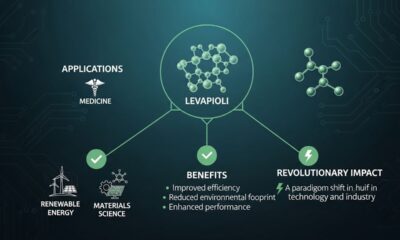
Levapioli: The Emerging Concept Reshaping Digital Efficiency and Decision-Mak