
Education
Classroom 30x: What Teachers Actually Need to Know Before They Dive In


Let me be real with you. I’m not a tech-evangelist type. I’m a teacher who has been in classrooms for over a decade, and I’ve seen enough “revolutionary EdTech tools” come and go to be pretty skeptical of anything that promises to make my job easier. So when a colleague mentioned Classroom 30x during a professional development session, I nodded politely and went back to my coffee.
Then I actually tried it. And now I’m writing this for every teacher who’s in the same skeptical-but-curious place I was.
So What Even Is Classroom 30x?
Classroom 30x is a classroom management and student engagement platform built specifically for K-12 and higher-ed environments. The “30x” in the name is a nod to scaling — the idea that good teaching structures should work whether you have 10 students or 300. It handles everything from live attendance tracking and seating charts to student screen monitoring, quiz launches, and real-time participation data.
Think of it as a control room for your classroom — both physical and virtual. It sits on top of your existing school ecosystem (Google Classroom, Microsoft Teams, or Canvas) and adds a layer of visibility and control that those platforms just don’t have on their own.
Classroom 30x works on Chromebooks, Windows, macOS, and iPads — which matters a lot in mixed-device schools. It doesn’t require students to install anything extra if your district has deployed it via MDM (Mobile Device Management).
My First Week With It (Honest Account)
The setup took about an afternoon — mostly syncing my existing Google Classroom rosters. That part was genuinely painless. The dashboard loaded, my class sections were there, and the seating chart tool let me drag and drop student names onto a visual grid of my actual classroom layout. Small thing, but weirdly satisfying.
Day one with students was… mixed. The screen monitoring feature flagged three kids who had wandered to gaming sites during independent work time. I handled it quietly — there’s a feature where you can send a silent alert directly to a student’s screen (“Please refocus on your work”) without publicly calling them out. The kids looked startled, glanced around to figure out how I knew, and got back on task. Honestly, more effective than anything I would have said out loud.
But here’s the thing nobody tells you: the data volume is overwhelming at first. Classroom 30x shows you a lot — who clicked what, how long they spent on each task, which students haven’t opened the assignment yet. It took me about two weeks to figure out which metrics actually mattered for my teaching style and which ones I could ignore.
The Features Worth Your Time
Live Participation Tracking
This one became my favorite. During discussions, you can enable a “participation mode” where students tap a response button — agree, disagree, confused, or have a question. It shows up in real-time on your dashboard as a color-coded heat map of the room. No more guessing who’s lost and who’s got it. I started using this for quick comprehension checks before moving on, and it changed how I paced my lessons entirely.
The Focus Mode
You can push a “focus lock” to student devices that restricts access to only the tab or app you specify. It sounds heavy-handed, but students actually told me they found it helpful during timed assessments — fewer distractions meant they weren’t fighting their own impulse to check YouTube. One student literally thanked me for it during an exam. I almost fell out of my chair.
Seating Chart + Attendance Combo
The seating chart isn’t just cosmetic. It ties into attendance. When you tap “mark present,” you’re doing it visually on the room layout — so if someone’s sitting in the wrong seat, you catch it immediately. For teachers managing multiple sections with rotating substitutes, this alone is worth the setup time.
Quiz and Poll Integration
You can launch quick polls and exit tickets directly from the Classroom 30x dashboard without switching to another platform. It’s not as feature-rich as Kahoot or Mentimeter, but the fact that it’s integrated means one less tab to juggle. For simple checks — “on a scale of 1-5, how confident are you in today’s material?” — it’s perfect.
Step-by-Step: Getting Started Without Losing Your Mind
- Request district access first. Classroom 30x typically requires an admin or IT license, not individual teacher sign-up. Talk to your school’s tech coordinator before downloading anything. Ask if your district already has a license — you might be surprised.
- Sync your existing roster. Connect via Google Workspace or Microsoft 365 on day one. Don’t manually enter students — it’s unnecessary and error-prone. The import takes under five minutes.
- Build your seating chart before students arrive. Use the drag-and-drop layout tool. Upload a rough sketch of your room if the default templates don’t match. Getting this right upfront saves confusion for weeks.
- Start with just one feature. Don’t try to use live monitoring, focus mode, participation tracking, and quizzes in week one. Pick participation tracking or the silent redirect tool — whichever fits your classroom culture — and get comfortable with that before layering in more.
- Debrief with students. Tell them what you’re monitoring and why. Transparency matters. When students understand that the goal is to help them stay on task — not to surveil them — their reaction shifts from resentment to acceptance pretty quickly.
- Check the analytics weekly, not daily. The data is rich but it can become noise. Set aside 15 minutes on Friday afternoons to review participation patterns and engagement dips. That rhythm works better than obsessing over live stats mid-lesson.
Common Mistakes Teachers Make (I Made Most of These)
What It Doesn’t Do Well
Classroom 30x isn’t a grading tool. It doesn’t replace Google Classroom or Canvas for assignment management, feedback, or rubric-based evaluation. If you go in expecting a full LMS replacement, you’ll be disappointed.
The analytics dashboard, while impressive-looking, can feel like data for data’s sake if you don’t have a clear question you’re trying to answer. “Who engaged with today’s content and who didn’t?” is a useful question. Staring at 47 metrics without a purpose is just exhausting.
Also — and this surprised me — the support documentation is decent but not great. There are YouTube tutorials from other teachers that are far more helpful than the official help center for specific use cases like setting up shared classes or managing substitutes.
Search “Classroom 30x teacher community” on Facebook or Reddit — there are active groups of teachers sharing templates, seating chart hacks, and integration workarounds that save hours of figuring things out alone.
Real Use Case: The Substitute Problem
Here’s something nobody talks about enough. Classroom 30x has a substitute mode. When a sub logs in using guest credentials your admin sets up, they get a simplified view — the seating chart, attendance, and the day’s schedule. No access to monitoring data or sensitive student info, just what they need to manage the room.
I tested this once when I had a last-minute appointment. Left the sub credentials on a sticky note with my plans. When I checked the attendance report later, everything was accurately logged. The sub told me it was “the clearest classroom setup she’d ever walked into.” That alone made the whole thing worth it for me.
Is It Worth It for Your School?
If your school already has a device program (1:1 Chromebooks, iPads, or laptops), Classroom 30x genuinely adds value. The focus tools and participation visibility solve real problems — not hypothetical EdTech problems, but the “I have no idea if this explanation is landing” and “why is that kid always on YouTube” problems you deal with every Tuesday.
If devices are limited or inconsistent, the value drops significantly. A lot of the best features need reliable student device access to function.
The pricing is institutional — your district negotiates it, so individual teachers can’t exactly run a cost-benefit analysis on their own. But if the decision is being made at the admin level, push for a pilot semester before a full rollout. The adoption curve is real, and not every teacher will find it equally useful.
Classroom 30x is the kind of tool that works when you work with it. It rewards teachers who are willing to invest two or three weeks upfront and then genuinely change how they look at classroom data. It doesn’t work as a “set it and forget it” install. If you treat it like another checkbox on your school’s tech adoption list, you’ll wonder what the fuss was about. But if you let it actually change one or two habits — how you check for understanding, how you handle off-task behavior quietly — it pays off in ways you’ll feel every single day in the room.



In a world where industries evolve faster than traditional education systems can keep up, Classroom 30x emerges as a bold rethinking of how learning should function in the modern economy. For startup founders, entrepreneurs, and tech professionals, Classroom 30x is not just an education model—it is a blueprint for how talent, skills, and innovation will be built in the next decade.
At its core, Classroom 30x represents a shift from static, uniform teaching systems to dynamic, data-driven, and deeply personalized learning environments. Instead of treating education as a linear process, it transforms it into an adaptive ecosystem that evolves with the learner. This change is not theoretical anymore—it is already influencing how companies think about workforce development, training pipelines, and innovation strategy.
Understanding Classroom 30x in a Modern Digital Economy
To understand Classroom 30x, it is important to step away from the traditional image of a classroom. Rows of desks, fixed curriculums, and standardized testing belong to an older industrial mindset. In contrast, Classroom 30x is built for a world where skills expire quickly and adaptability matters more than memorization.
The idea behind Classroom 30x is simple but powerful: learning should scale like technology. Just as cloud platforms can serve millions of users without losing performance, education systems should be able to deliver personalized learning experiences at massive scale.
This model combines artificial intelligence, behavioral analytics, adaptive content systems, and real-time feedback loops. The result is a learning environment that continuously adjusts to each learner’s progress, pace, and potential.
For entrepreneurs, this shift mirrors what has already happened in product development—moving from one-size-fits-all solutions to hyper-personalized digital experiences.
Why Classroom 30x Matters for Startups and Tech Leaders
The relevance of Classroom 30x goes far beyond education. It directly impacts how future teams are built, trained, and scaled.
Startups often face a common challenge: hiring talent that is skilled, adaptable, and ready for fast-changing environments. Traditional education systems struggle to produce such talent at scale. Classroom 30x addresses this gap by aligning learning outcomes with real-world industry demands.
Instead of graduating students with static knowledge, Classroom 30x produces individuals who are comfortable working with uncertainty, new technologies, and evolving problem sets. For companies operating in AI, SaaS, fintech, or deep tech, this kind of workforce is invaluable.
The Structural Design of Classroom 30x
Classroom 30x is not a single tool or platform—it is an integrated system. It combines several layers of technology and pedagogy into one cohesive model.
At the foundation is adaptive learning logic, which tracks learner behavior and performance in real time. Above that sits a content intelligence layer that modifies lessons dynamically. Then comes an engagement layer that uses interactive simulations, collaborative environments, and scenario-based learning to deepen understanding.
Together, these layers create a system that behaves more like a living organism than a static institution.
Traditional Learning vs Classroom 30x
To fully appreciate the transformation, it helps to compare the two models side by side.
| Dimension | Traditional Classroom | Classroom 30x |
|---|---|---|
| Learning Structure | Fixed syllabus | Adaptive, evolving pathways |
| Pace of Learning | Uniform for all students | Personalized per individual |
| Feedback Cycle | Periodic exams and grading | Continuous real-time feedback |
| Technology Usage | Minimal or supplementary | Fully integrated and foundational |
| Engagement Style | Passive listening | Interactive, immersive, and applied |
| Skill Relevance | Theoretical and delayed | Industry-aligned and real-time |
| Scalability | Physically constrained | Digitally scalable at global level |
This comparison highlights why Classroom 30x is becoming increasingly relevant in discussions about future-ready education systems and workforce development strategies.
The Technology Stack Behind Classroom 30x
At the heart of Classroom 30x is a powerful technology ecosystem that enables personalization at scale.
Artificial intelligence plays a central role by analyzing student performance patterns and predicting learning gaps before they become barriers. Machine learning models continuously refine content delivery, ensuring that learners receive exactly what they need at the right time.
Augmented reality and virtual environments add another dimension. Complex concepts become easier to grasp when learners can interact with them visually and spatially. For example, engineering students can simulate real-world systems, while business learners can practice decision-making in virtual market environments.
Data infrastructure is equally critical. Every interaction generates insights that feed back into the system, making it smarter over time. This creates a self-improving educational ecosystem that becomes more effective with scale.
Classroom 30x and the Future of Workforce Development
One of the most significant impacts of Classroom 30x lies in workforce transformation. Companies today are not just hiring for skills—they are hiring for adaptability.
Classroom 30x produces learners who are trained in environments that mimic real-world complexity. Instead of solving predefined textbook problems, they engage in dynamic challenges that evolve based on their decisions.
This creates a workforce that is not only technically competent but also strategically agile. For industries like software development, data science, and product management, this shift is particularly important.
It also reduces the gap between academic learning and workplace expectations. Employees trained in Classroom 30x environments require less onboarding and adapt more quickly to organizational systems.
Business Applications and Startup Opportunities
For startups, Classroom 30x is more than an educational concept—it is an emerging market opportunity.
Companies can build platforms that deliver adaptive learning engines tailored to specific industries. Others may focus on immersive training environments using virtual reality or AI-driven coaching systems.
There is also significant potential in enterprise learning solutions. Organizations are increasingly investing in upskilling their workforce, and Classroom 30x frameworks offer a scalable way to do that efficiently.
Beyond product development, partnerships with educational institutions present another avenue. By integrating Classroom 30x systems into universities and training centers, startups can test, refine, and scale their innovations while creating real-world impact.
Challenges in Implementing Classroom 30x
Despite its promise, Classroom 30x is not without obstacles.
One of the biggest challenges is infrastructure readiness. Many regions still lack the digital foundation required to support advanced learning systems. Without reliable internet access and devices, the model cannot reach its full potential.
Another challenge is educator adaptation. Teachers must transition from being content deliverers to learning facilitators. This requires training, mindset shifts, and institutional support.
There is also the issue of data privacy. Since Classroom 30x relies heavily on behavioral data, ensuring ethical use and protection of that data is essential.
Finally, there is the risk of over-automation. While technology enhances learning, it cannot replace human mentorship, emotional intelligence, and social development.
The Future Evolution of Classroom 30x
Looking ahead, Classroom 30x is expected to become even more sophisticated as technologies evolve. Artificial intelligence will move from reactive systems to predictive learning environments that anticipate student needs before they arise.
We will also see deeper integration of immersive technologies. Virtual campuses, holographic instruction, and real-time global collaboration spaces may become standard components of the learning experience.
In the long term, Classroom 30x could evolve into a fully decentralized learning ecosystem where knowledge is continuously created, shared, and updated by global contributors rather than centralized institutions.
For businesses and startups, this opens up a vast landscape of innovation opportunities in education technology, workforce training, and digital skill ecosystems.
Conclusion: A New Blueprint for Learning and Innovation
Classroom 30x is not simply an upgrade to traditional education—it is a structural reinvention of how learning connects with the modern economy. It aligns education with the speed of technological change, ensuring that learners are not just prepared for today’s jobs but for tomorrow’s unknown challenges.
For startup founders, entrepreneurs, and tech professionals, this shift is particularly significant. It signals the rise of a new talent ecosystem where adaptability, continuous learning, and real-world problem-solving define success.
As industries continue to evolve, Classroom 30x stands as a powerful framework for building the next generation of thinkers, builders, and innovators. It is not just about teaching better—it is about learning smarter, scaling faster, and preparing for a future that never stands still.
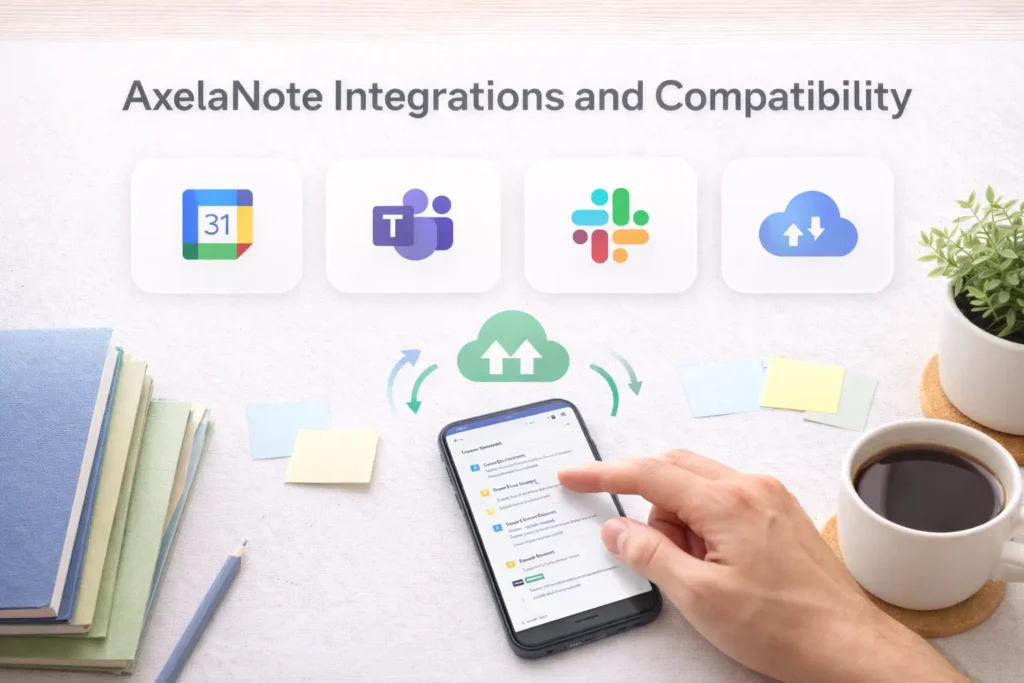
In today’s startup ecosystem, speed is expected—but structured speed is what actually wins. Founders are no longer just building products; they are building interconnected systems that must scale under pressure, adapt to changing markets, and still deliver consistent user experiences. In this environment, axelanote is emerging as a conceptual framework that represents a more disciplined, system-driven approach to digital growth.
While axelanote is not a traditional tool or platform, it reflects a very real shift in how modern startups think about operations, data flow, and execution. Instead of relying on disconnected tools and reactive workflows, it emphasizes structured integration—where systems, teams, and decisions are aligned from the start.
For startup founders, entrepreneurs, and tech professionals, this approach is becoming increasingly relevant. Growth is no longer just about adding more features or users. It is about building systems that can sustain complexity without collapsing under it.
Axelanote sits at the center of that transformation.
Understanding Axelanote in a Real Startup Environment
At its core, axelanote can be understood as a structured operational philosophy designed to unify digital workflows and improve execution efficiency. It encourages startups to move away from fragmented systems and toward a more connected operational architecture.
Most startups begin with a familiar pattern: rapid tool adoption. One platform for communication, another for project management, another for analytics, and another for customer engagement. This works well in early stages because it enables speed and flexibility.
However, as the company scales, these systems begin to create friction.
Data becomes scattered. Teams operate in silos. Reporting becomes inconsistent. And decision-making slows down because information is no longer centralized.
This is where axelanote becomes relevant. It encourages startups to design their operations as a unified system rather than a collection of disconnected tools.
For example, a fintech startup applying axelanote might connect transaction data, customer onboarding, risk monitoring, and support systems into a single integrated workflow. This ensures that every team operates with real-time, shared visibility.
The result is not just efficiency—it is operational clarity at scale.
Why Axelanote Matters for Modern Founders
Startup founders operate in an environment where every decision has compounding consequences. A small inefficiency today can become a major bottleneck tomorrow. Axelanote matters because it helps founders design systems that prevent these bottlenecks before they form.
One of the biggest challenges in scaling startups is hidden complexity. As companies grow, they accumulate tools, processes, and workflows that were never designed to work together. This creates operational drag that is often invisible until it becomes critical.
Without structured systems, teams spend more time managing tools than building value.
Axelanote solves this by promoting system alignment from the beginning. Instead of adding tools reactively, it encourages founders to design integrated workflows where data and execution flow naturally across the organization.
This reduces friction, improves coordination, and allows teams to focus on high-impact work rather than administrative overhead.
In competitive markets, this operational clarity often becomes a key differentiator.
Core Structural Components of Axelanote
The strength of axelanote lies in its structured approach to system design. It is built on several interconnected components that define how startups operate efficiently at scale.
| Component | Purpose | Startup Impact |
|---|---|---|
| System Integration | Connects all operational tools | Eliminates silos and improves visibility |
| Workflow Automation | Reduces manual processes | Increases speed and consistency |
| Centralized Data Layer | Unifies business intelligence | Improves decision-making accuracy |
| Experience Alignment | Connects customer journey stages | Enhances user satisfaction |
| Scalable Architecture | Supports long-term growth | Prevents operational breakdown |
Each component plays a critical role in shaping how a startup functions. Integration ensures connectivity across tools. Automation reduces repetitive tasks. A centralized data layer provides clarity. Experience alignment improves customer journeys. And scalable architecture ensures the system can grow without breaking.
Together, these components form a complete operational foundation for axelanote.
How Axelanote Improves Operational Efficiency
Operational efficiency is one of the most important success factors for startups. Limited time, capital, and resources mean that every process must contribute meaningfully to growth. Axelanote improves efficiency by reducing unnecessary complexity and eliminating disconnected workflows.
In many startups, inefficiencies come from manual coordination between systems. Teams constantly transfer data between platforms, update spreadsheets, or reconcile inconsistent reports. These activities slow down execution and introduce errors.
With axelanote, workflows are connected end-to-end. Data flows automatically between systems, ensuring consistency and reducing manual effort.
For instance, when a new customer signs up for a product, their data can automatically flow into onboarding systems, analytics dashboards, and support platforms. This creates a seamless operational loop where no information is lost or duplicated.
The result is a faster, leaner organization that can scale without increasing operational friction.
Axelanote and Customer Experience Alignment
Customer experience is now one of the most important competitive advantages in digital business. Users expect seamless interactions, fast responses, and personalized experiences across all touchpoints. Axelanote directly supports this by aligning internal systems with the customer journey.
When systems are disconnected, customer experience suffers. Support teams lack context, marketing messages feel irrelevant, and onboarding experiences become fragmented.
With axelanote, all customer-related data and workflows are unified. This allows businesses to understand user behavior in real time and respond more intelligently.
For example, a subscription-based SaaS platform using axelanote can track user engagement, detect churn signals, trigger automated support responses, and personalize onboarding flows—all within a connected system.
This level of integration significantly improves customer satisfaction and retention.
In modern digital markets, customer experience is not just a feature—it is the foundation of growth.
Scaling Startups with Axelanote
Scaling is where many startups struggle the most. Systems that work for 10 users often fail at 10,000. Axelanote addresses this challenge by embedding scalability into the operational structure from the beginning.
Instead of adding new tools as problems arise, startups using axelanote design systems that evolve with growth. This includes modular workflows, automated processes, and centralized data systems that can handle increasing complexity.
This proactive approach reduces the risk of operational breakdown during rapid expansion. Teams remain aligned, processes remain stable, and customers continue to receive consistent service.
From an investor perspective, scalability is one of the most important indicators of startup maturity. A company built on axelanote principles demonstrates readiness for sustainable growth, making it more attractive for funding and strategic partnerships.
Challenges in Implementing Axelanote
While axelanote offers significant advantages, implementing it is not without challenges. Startups may face technical limitations, legacy system constraints, or resistance to change within teams.
Shifting from fragmented tools to an integrated system requires planning and gradual adoption. Teams must adjust workflows and adapt to new operational structures.
However, these challenges can be managed effectively through phased implementation. Startups can begin by integrating high-impact areas such as onboarding or analytics before expanding system-wide adoption.
The key is to view axelanote as a long-term transformation rather than a short-term optimization.
The Future of Axelanote in Digital Business
As digital ecosystems become more complex, frameworks like axelanote will play an increasingly important role. Startups that can unify systems, automate intelligently, and maintain operational clarity will outperform those relying on fragmented structures.
The future of startup success will depend on how effectively companies can connect innovation with execution. Axelanote provides a blueprint for achieving this balance.
It represents a shift toward more intelligent, structured, and scalable business design—where operations are as important as innovation.
Conclusion
In a startup landscape defined by speed, complexity, and constant change, axelanote offers a powerful framework for building structured and scalable digital businesses. By integrating systems, improving workflows, and aligning customer experiences, it helps startups operate with greater clarity and efficiency.
For founders, entrepreneurs, and tech professionals, axelanote is more than a concept—it is a strategic approach to building modern, sustainable digital success.
As competition intensifies, startups that adopt axelanote will be better positioned to scale, adapt, and thrive in an increasingly connected digital world.
Education
What permonidehidom used in: Understanding the Term Possible Meanings and Real World Chemical Context

The phrase what permonidehidom used in appears increasingly in search queries, yet it does not clearly correspond to any widely recognized chemical, pharmaceutical compound, or industrial material in established scientific literature. This creates an interesting challenge for researchers, students, and professionals who encounter it in online discussions or fragmented data sources.
In many cases, emerging or misspelled technical terms circulate through digital platforms before being standardized—or corrected—by scientific communities. That is why understanding what permonidehidom used in requires more than a direct definition. It requires contextual interpretation, chemical literacy, and awareness of how terminology evolves in modern information ecosystems.
For startup founders and tech professionals working in health tech, industrial analytics, or AI-driven research tools, this situation is particularly relevant. Data ambiguity is one of the biggest challenges in building reliable knowledge systems.
The Challenge Behind the Term “what permonidehidom used in”
At first glance, what permonidehidom used in appears to refer to a chemical substance. However, no verified compound with this exact name exists in standard chemical databases or regulatory references.
This suggests several possibilities:
The term may be a misspelling of a known chemical
It may originate from automated text generation or transcription errors
It could be a fragmented translation from another language
It may represent a fictional or informal label used online
In scientific communication, precision is essential. Even minor spelling variations can completely change meaning. For example, “hydrogen peroxide” and “peroxide hydride” may sound similar but refer to different interpretations or structures in chemistry discussions.
This highlights a broader issue in digital knowledge systems: unreliable naming conventions.
Why Chemical Naming Confusion Happens
Chemical nomenclature follows strict international rules governed by bodies such as IUPAC (International Union of Pure and Applied Chemistry). However, outside academic and industrial environments, names often become distorted.
Common causes include:
Phonetic spelling errors in online search queries
Auto-correct or translation mistakes
Misheard terminology in educational content
AI-generated text inconsistencies
Non-standard naming in informal forums
This is especially common in emerging markets and fast-growing digital platforms where technical validation is limited.
As a result, terms like what permonidehidom used in can circulate widely even without scientific grounding.
Interpreting the Possible Intended Meaning
While the exact term is unclear, it is still possible to explore what users might be trying to reference.
Based on linguistic patterns, “permonidehidom” could loosely resemble:
Peroxide-based compounds
Aldehyde-related disinfectants
Hydrogen-based reactive chemicals
Industrial sterilization agents
These categories are widely used in chemistry, healthcare, and manufacturing industries.
For example, hydrogen peroxide is commonly used in:
Disinfection and sterilization
Industrial bleaching processes
Water treatment systems
Medical cleaning solutions
Similarly, aldehyde compounds are used in:
Preservation of biological specimens
Chemical synthesis
Surface sterilization in controlled environments
While we cannot directly map “permonidehidom” to any known compound, these related categories provide a realistic scientific context.
The Importance of Precision in Scientific Communication
In industries like pharmaceuticals, biotech, and chemical manufacturing, precision is not optional—it is essential.
A small naming error can lead to:
Misinterpretation of safety data
Incorrect material handling
Regulatory compliance issues
Research inconsistencies
This is why organizations such as International Union of Pure and Applied Chemistry exist—to standardize naming conventions and ensure global consistency.
When ambiguous terms like what permonidehidom used in appear, professionals must rely on verified databases and peer-reviewed sources before drawing conclusions.
How Digital Systems Misinterpret Chemical Data
Modern AI systems, search engines, and data pipelines often process massive amounts of unstructured information. In this environment, errors can easily propagate.
For example:
OCR (optical character recognition) may misread chemical names
Machine translation may distort technical terms
Autocomplete systems may merge unrelated words
AI training datasets may include incorrect references
This leads to what experts call “semantic drift”—where a term gradually loses its original meaning through repeated distortion.
For tech professionals building AI systems, this is a critical challenge in data validation and natural language processing.
Table: Possible Interpretations of “what permonidehidom used in”
| Interpreted Category | Possible Real-World Equivalent | Common Uses | Confidence Level |
|---|---|---|---|
| Peroxide-based compounds | Hydrogen peroxide derivatives | Disinfection, bleaching | Medium |
| Aldehyde-based chemicals | Formaldehyde-like substances | Preservation, sterilization | Medium |
| Industrial cleaning agents | Reactive oxygen compounds | Surface cleaning, sanitation | Medium |
| Synthetic or incorrect term | Non-standard or misspelled keyword | Unknown / unclear context | High |
| AI-generated or fragmented term | N/A | Data noise in digital systems | High |
This table demonstrates how uncertain terminology is often interpreted through approximation rather than exact identification.
Real-World Industries That Deal With Similar Compounds
Even though what permonidehidom used in does not correspond to a verified compound, the categories it resembles are widely used across multiple industries.
Healthcare and Medical Sterilization
Hospitals frequently rely on strong oxidizing agents for cleaning surgical tools and surfaces. These substances must meet strict regulatory standards.
Water Treatment Facilities
Chemical disinfectants are used to remove bacteria, viruses, and organic contaminants from water supplies.
Manufacturing and Materials Processing
Industrial chemicals are used for bleaching, cleaning, and preparing raw materials in controlled environments.
Research Laboratories
Scientific labs often handle reactive compounds for experimentation and synthesis under strict safety protocols.
These sectors demonstrate the importance of chemical accuracy and classification.
The Role of Search Engines in Spreading Ambiguous Terms
Search engines often amplify unclear terms when users repeatedly query them. Once a phrase gains traction—even if incorrect—it can appear legitimate due to frequency alone.
This is particularly relevant for startup founders working in:
SEO optimization
AI content generation
Knowledge graph construction
Search engine indexing
If systems are not properly trained to validate scientific terminology, misinformation can become embedded in digital ecosystems.
Why This Matters for Tech and Startup Ecosystems
For entrepreneurs building data-driven products, ambiguity like what permonidehidom used in is not just a linguistic issue—it is a data integrity problem.
Impacts include:
Reduced accuracy in AI search tools
Poor user trust in recommendation systems
Incorrect categorization of scientific content
Increased operational risk in regulated industries
Startups working in health tech, biotech, or AI must implement strong validation layers to prevent such issues.
Platforms like Google Cloud AI emphasize structured data pipelines to reduce ambiguity and improve semantic accuracy.
How to Approach Unknown Technical Terms Safely
When encountering unclear scientific terms, professionals should follow a structured approach:
Verify spelling against trusted databases
Check peer-reviewed literature
Cross-reference regulatory sources
Avoid assumptions based on phonetics alone
Flag ambiguous terms in data pipelines
This disciplined approach helps prevent errors from spreading into downstream systems.
The Future of Scientific Data Clarity
As AI becomes more integrated into scientific research and industrial workflows, the need for clean, validated terminology will only increase.
Future systems will likely include:
Real-time chemical name validation engines
AI-powered ontology mapping tools
Self-correcting knowledge graphs
Multilingual scientific standardization layers
These advancements will reduce confusion around terms like what permonidehidom used in and improve global data consistency.
Conclusion
The phrase what permonidehidom used in does not correspond to any verified chemical compound in scientific literature. However, its presence highlights a much larger issue: the growing challenge of interpreting ambiguous, misspelled, or AI-generated terminology in digital ecosystems.
By examining related chemical categories, understanding naming conventions, and recognizing how data errors spread, we gain valuable insight into the importance of precision in science and technology.
For startups, researchers, and tech professionals, this serves as a reminder that accurate data is not just a technical requirement—it is the foundation of trustworthy innovation.
As digital systems continue to evolve, the ability to distinguish between verified knowledge and linguistic noise will become one of the most critical skills in the modern tech landscape.
-

 Blog3 months ago
HHKTHK: Decoding Digital Noise and Strategic Signals in Modern Tech
-

 Blog3 months ago
Lollitip: How Innovative Design is Transforming Consumer Experience
-

 Blog3 months ago
Simbramento: A New Strategic Model for Scalable Digital Growth
-

 Blog3 months ago
hellooworl: The Mindset Behind Building What the World Hasn’t Seen Yet
-

 Blog3 months ago
Calesshop: Redefining Digital Commerce for Modern Entrepreneurs
-

 Blog3 months ago
From Blog PlayBattleSquare: How Competitive Gaming Platforms Are Shaping the Future of Digital Communities
-

 Blog3 months ago
Babybelletje: Designing Micro-Connection Moments in a Hyper-Digital World
-

 Blog3 months ago
Kovových Innovation: Why Advanced Metal Engineering Is Powering the Next Industrial Wave