
Blog
Levapioli: The Emerging Concept Reshaping Digital Efficiency and Decision-Mak

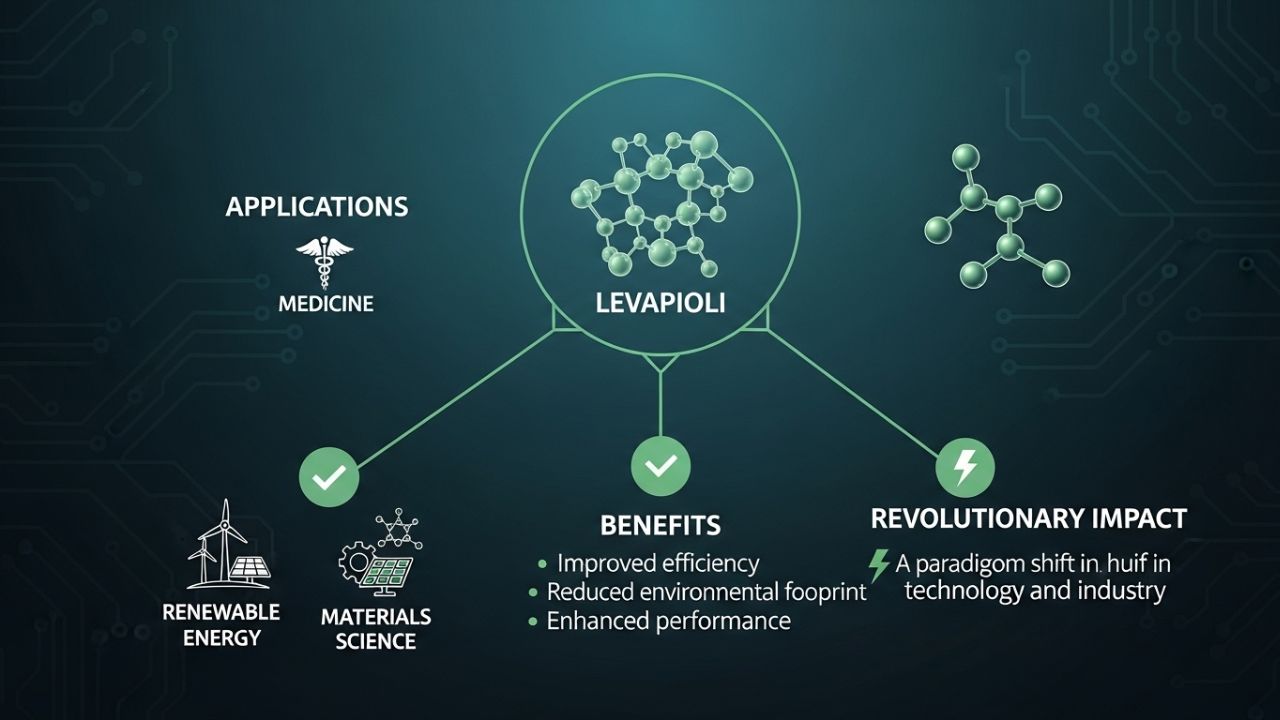
In the startup world, clarity is currency. Every decision—whether it’s hiring a key engineer, entering a new market, or pivoting a product—carries weight. Yet many founders operate in an environment overloaded with data, noise, and constant urgency. Somewhere between analytics dashboards and Slack notifications, signal gets buried under clutter. That’s where the idea of levapioli enters the conversation.
Levapioli is an emerging framework centered on intelligent simplification—reducing operational friction, cognitive overload, and process inefficiencies so that leaders can focus on high-impact decisions. While the term may be new to many, the underlying challenge it addresses is universal: how do you scale without drowning in complexity?
For entrepreneurs, tech professionals, and digital leaders, levapioli is less about theory and more about strategic execution. It is about designing systems that are lean, adaptive, and aligned with measurable outcomes.
Understanding Levapioli in a Practical Context
At its core, levapioli represents structured simplification. It’s not minimalism for aesthetics. It’s operational clarity designed to improve performance.
Modern organizations accumulate tools, dashboards, workflows, communication channels, and approval layers at astonishing speed. A startup with five employees can operate intuitively. At fifty, things begin to strain. At two hundred, inefficiencies multiply.
Levapioli addresses this growth friction by asking three foundational questions:
Are we measuring what truly matters?
Are our processes accelerating or delaying decisions?
Are we scaling complexity faster than revenue?
Unlike traditional efficiency audits, levapioli does not focus solely on cost reduction. Instead, it evaluates cognitive load and execution speed as primary metrics. In digital businesses, speed and clarity often outweigh incremental savings.
Why Startup Founders Should Care About Levapioli
Early-stage companies often pride themselves on agility. Ironically, as soon as funding arrives, that agility begins to erode. New hires bring new tools. Investors request additional reporting. Teams create parallel workflows. Documentation expands. Meetings multiply.
Founders frequently respond by working longer hours rather than redesigning systems.
Levapioli challenges that instinct. It suggests that scaling sustainably requires subtracting as much as adding.
Imagine a SaaS company that uses eight different project management tools across departments. Each team defends its choice. Data becomes fragmented. Leadership loses real-time visibility. Decisions slow.
Applying levapioli principles might mean consolidating tools, standardizing reporting metrics, and aligning communication flows. The outcome is not just fewer subscriptions—it’s sharper insight.
The Psychological Dimension of Levapioli
Complex systems don’t just strain operations—they exhaust people.
Cognitive overload reduces creativity, increases error rates, and contributes to burnout. For tech professionals, constant context switching between apps and workflows diminishes deep work capacity.
Levapioli emphasizes mental bandwidth as a strategic asset. When leaders design environments that reduce unnecessary inputs, they create room for innovation.
Neuroscience research consistently shows that decision fatigue impairs judgment quality. Entrepreneurs making high-stakes choices cannot afford diluted focus.
In this sense, levapioli becomes a performance strategy rather than an operational tweak.
Levapioli and Data Discipline
Data is powerful—but undisciplined data is noise.
Many companies collect far more information than they meaningfully analyze. Dashboards become visual clutter. Metrics multiply without clear ownership.
Levapioli encourages metric minimalism: identifying a small set of high-signal indicators that directly align with strategic objectives.
Below is a simplified comparison that illustrates how levapioli reframes data management:
| Approach | Data-Heavy Organization | Levapioli-Oriented Organization |
| Metrics Tracked | Dozens across teams | 5–10 core performance indicators |
| Reporting Frequency | Constant, fragmented | Structured and purposeful |
| Tool Stack | Redundant platforms | Consolidated ecosystem |
| Decision Speed | Slower due to analysis overload | Faster due to clarity |
| Cognitive Load | High | Controlled |
The goal isn’t ignorance—it’s precision.
Levapioli in Product Development
Product teams are especially vulnerable to complexity creep. Feature requests accumulate. Roadmaps expand. Edge cases multiply.
Without discipline, products become bloated, harder to maintain, and less intuitive for users.
Levapioli in product development means ruthless prioritization. It requires separating “nice-to-have” features from core value drivers. It also demands regular audits of legacy features that no longer justify maintenance costs.
Many successful tech companies are admired for simplicity. That simplicity is rarely accidental. It is often the result of deliberate subtraction.
For founders, applying levapioli to product design can reduce technical debt and accelerate iteration cycles.
Organizational Levapioli: Structure Without Bureaucracy
As teams grow, structure becomes necessary. The danger lies in drifting into bureaucracy.
Levapioli does not advocate chaos. Instead, it supports lean governance. Clear accountability. Transparent decision rights. Defined communication pathways.
For example, rather than requiring multi-layered approvals for minor expenditures, levapioli might introduce spending thresholds tied to role responsibility. This reduces friction without sacrificing oversight.
Similarly, replacing recurring status meetings with asynchronous updates can preserve transparency while protecting focus time.
The underlying principle remains consistent: eliminate friction that does not create value.
Financial Strategy Through a Levapioli Lens
Financial clarity often reveals operational inefficiency.
When expenses scale faster than measurable impact, complexity is usually involved. Redundant tools, overlapping vendor contracts, and unclear ROI metrics dilute capital efficiency.
Levapioli encourages periodic simplification audits. Which expenses directly contribute to growth? Which processes generate measurable return? Which layers exist solely because they always have?
This perspective aligns well with investor expectations. Venture capital increasingly favors capital-efficient growth over reckless expansion.
By embedding levapioli principles into financial planning, founders strengthen both operational and investor confidence.
The Cultural Impact of Levapioli
Culture is shaped by systems. When processes are bloated, frustration rises. When communication is unclear, trust erodes.
Conversely, streamlined workflows foster autonomy and accountability.
Levapioli influences culture by reducing ambiguity. Clear metrics reduce political maneuvering. Transparent processes reduce blame-shifting. Simplicity reinforces alignment.
High-performing cultures rarely thrive in chaotic operational environments. They require clarity.
For remote and hybrid teams, this clarity becomes even more critical. Distributed work magnifies confusion if systems are not intentionally designed.
Implementing Levapioli Without Disruption
Change management is often the most difficult part of simplification. People grow attached to tools and routines.
Effective implementation begins with visibility. Map workflows. Identify bottlenecks. Quantify delays. Highlight redundancies.
Next, pilot changes within a single team or function. Measure outcomes. Refine. Then expand gradually.
Levapioli is not a one-time overhaul. It is an ongoing discipline.
Leaders must also model the mindset. If executives introduce new tools without eliminating old ones, simplification efforts collapse.
Consistency builds credibility.
The Competitive Advantage of Levapioli
In crowded markets, marginal efficiency gains can determine survival. Companies that move faster, think clearer, and execute decisively outperform bloated competitors.
Levapioli provides competitive advantage through:
Sharper focus
Faster decision cycles
Reduced operational drag
Improved team morale
Lower cognitive fatigue
While competitors add layers, levapioli-driven organizations refine.
Over time, that refinement compounds.
Looking Ahead: Levapioli as a Leadership Philosophy
Beyond operations, levapioli reflects a broader leadership philosophy: clarity over clutter, impact over volume, discipline over distraction.
In a digital age defined by abundance—of data, tools, content, and communication—the true differentiator is discernment.
Founders who master simplification create resilient organizations. They protect attention, capital, and momentum.
Levapioli is not about doing less for the sake of minimalism. It is about doing what matters—without dilution.
Conclusion: Scaling Without Losing Focus
Growth is exhilarating. It is also messy. Complexity sneaks in quietly, disguised as progress. New hires, new platforms, new metrics—each addition feels justified.
But unchecked accumulation slows momentum.
Levapioli offers a counterbalance. It reminds startup founders and tech leaders that subtraction is strategic. That clarity fuels speed. That disciplined simplicity strengthens performance.
In an economy where attention is fragmented and competition relentless, the ability to simplify intelligently may become one of the most valuable executive skills.
Your startup does not need more noise. It needs sharper focus.
And levapioli, when applied thoughtfully, delivers exactly that.

In a world where customers expect same-day delivery, real-time tracking, and seamless service, logistics has evolved from a backend function into a core business differentiator. The concept of logisths captures this transformation—a modern, tech-driven approach to logistics that blends efficiency, intelligence, and scalability.
For startup founders, entrepreneurs, and tech professionals, understanding logisths is no longer optional. It represents the next phase of operational excellence, where supply chains are not just managed but optimized through data, automation, and strategic design. In the first interaction a customer has with your product, delivery experience can define trust. And in many cases, it determines whether they return.
Understanding Logisths in Today’s Business Landscape
At its essence, logisths is an evolved framework of logistics that integrates advanced technologies with traditional supply chain principles. It goes beyond transportation and warehousing to include predictive analytics, intelligent routing, and real-time visibility.
In the past, logistics was reactive. Companies responded to demand, addressed delays, and managed inventory based on historical data. Today, logisths shifts the approach to proactive and predictive. Businesses anticipate demand fluctuations, optimize routes dynamically, and adjust operations in real time.
This transformation is largely driven by the rise of e-commerce, global trade, and customer expectations. Companies can no longer afford inefficiencies in their supply chain. Every delay, error, or miscommunication has a direct impact on customer satisfaction and brand reputation.
Why Logisths Matters for Startups and Tech Leaders
For startups, logistics is often seen as a challenge—complex, resource-intensive, and difficult to scale. However, logisths reframes it as an opportunity.
By adopting modern logistics strategies early, startups can build systems that scale efficiently. Instead of retrofitting processes later, they can design operations that are flexible, data-driven, and resilient from the beginning.
Tech professionals also play a critical role in this transformation. From building logistics platforms to integrating APIs and automation tools, technology is at the heart of logisths. The ability to connect systems, analyze data, and optimize workflows is what sets modern logistics apart.
Moreover, logisths enables better decision-making. With access to real-time data, businesses can identify bottlenecks, forecast demand, and allocate resources more effectively.
The Core Components of Logisths
To fully understand logisths, it’s important to explore its key components. These elements work together to create a seamless and efficient logistics ecosystem.
One of the most important components is data intelligence. Every movement within the supply chain generates data. When analyzed effectively, this data provides valuable insights that can improve performance and reduce costs.
Automation is another critical element. From warehouse operations to delivery routing, automation reduces manual effort and increases accuracy. It also allows businesses to scale operations without a proportional increase in resources.
Connectivity plays a central role as well. Modern logistics systems are interconnected, enabling real-time communication between suppliers, warehouses, and customers. This transparency enhances coordination and reduces delays.
Finally, there is adaptability. The ability to respond quickly to changes—whether it’s demand spikes, supply disruptions, or market shifts—is essential in today’s dynamic environment.
Traditional Logistics vs Logisths Approach
The shift from traditional logistics to logisths can be clearly seen in how operations are managed and optimized:
| Aspect | Traditional Logistics | Logisths Approach |
| Decision-Making | Reactive | Predictive and data-driven |
| Technology Usage | Limited | Advanced (AI, IoT, automation) |
| Visibility | Low | Real-time tracking and transparency |
| Scalability | Resource-dependent | Technology-enabled |
| Customer Experience | Secondary focus | Primary priority |
| Efficiency | Moderate | Optimized and continuously improving |
This comparison highlights why logisths is becoming the preferred model for forward-thinking businesses.
Real-World Applications of Logisths
The principles of logisths are already being applied across various industries, delivering measurable results.
In e-commerce, companies use predictive analytics to manage inventory and ensure products are available where and when they are needed. This reduces delivery times and improves customer satisfaction.
In manufacturing, logisths enables just-in-time production, minimizing waste and optimizing resource utilization. Real-time data allows manufacturers to adjust production schedules based on demand.
For logistics service providers, advanced routing algorithms optimize delivery paths, reducing fuel consumption and improving efficiency. This not only lowers costs but also contributes to sustainability efforts.
Even in healthcare, logisths plays a crucial role. Efficient supply chain management ensures that critical medical supplies are delivered on time, potentially saving lives.
Challenges in Implementing Logisths
While the benefits are significant, adopting logisths comes with its own set of challenges. One of the primary obstacles is integration. Many businesses rely on legacy systems that are not easily compatible with modern technologies.
Cost is another consideration. Implementing advanced logistics solutions requires investment in technology, infrastructure, and talent. For startups, this can be a significant barrier.
There is also the challenge of data management. Collecting data is relatively easy, but analyzing and utilizing it effectively requires expertise and the right tools.
Finally, there is the human factor. Employees need to adapt to new systems and processes, which can require training and cultural change within the organization.
Building a Logisths Strategy
For businesses looking to adopt logisths, the journey begins with a clear strategy. Understanding your current logistics operations is the first step. Identify inefficiencies, bottlenecks, and areas for improvement.
Next, invest in technology that aligns with your business goals. This could include warehouse management systems, transportation management software, or data analytics platforms.
Collaboration is also key. Working closely with suppliers, partners, and customers can improve coordination and enhance overall efficiency.
Continuous improvement should be a core principle. Logistics is not static—it evolves with market conditions, customer expectations, and technological advancements.
The Future of Logisths
As technology continues to advance, the future of logisths looks increasingly promising. Innovations such as autonomous vehicles, drone deliveries, and AI-driven decision-making are set to revolutionize the industry.
Sustainability will also play a major role. Businesses are under growing pressure to reduce their environmental impact. Logisths can help achieve this by optimizing routes, reducing waste, and improving resource efficiency.
Personalization is another emerging trend. Customers expect tailored experiences, and logistics systems must adapt to meet these expectations. This includes flexible delivery options, real-time updates, and customized services.
For startups and tech professionals, these trends present opportunities to innovate and lead. By embracing logisths, they can build systems that are not only efficient but also future-ready.
Why Logisths Is a Competitive Advantage
In today’s market, logistics is no longer just an operational function—it’s a strategic asset. Businesses that excel in logistics can differentiate themselves through speed, reliability, and customer experience.
Logisths provides the tools and framework needed to achieve this. By integrating technology, data, and strategy, it transforms logistics into a powerful driver of growth.
For entrepreneurs, this means viewing logistics not as a cost center, but as an investment. The returns come in the form of increased efficiency, improved customer satisfaction, and long-term scalability.
Conclusion
Logisths represents the future of logistics—a future where operations are intelligent, connected, and customer-centric. It challenges traditional approaches and offers a new way of thinking about supply chain management.
For startups, entrepreneurs, and tech professionals, adopting logisths is an opportunity to build stronger, more resilient businesses. It enables them to meet modern demands while preparing for future challenges.
In a world where expectations continue to rise, those who master logistics will lead the way. And with logisths, they have the blueprint to do just that.

In a world obsessed with rapid growth and overnight success, the most enduring ventures often begin quietly—with curiosity, patience, and a deep personal connection to the work. The mike wolfe passion project is a powerful example of this philosophy in action. Known widely for his role in American Pickers, Mike Wolfe has built far more than a television brand. He has created a multi-dimensional business rooted in storytelling, preservation, and authentic passion.
For startup founders, entrepreneurs, and tech professionals, the lessons embedded in the mike wolfe passion project extend far beyond antiques. They reveal how passion, when paired with strategic thinking, can evolve into a sustainable and scalable venture.
The Origin of the Mike Wolfe Passion Project
Long before television cameras followed his journey, Mike Wolfe was driven by a fascination with forgotten objects and the stories they carried. Growing up in rural America, he developed an early appreciation for history—not the kind found in textbooks, but the kind hidden in barns, garages, and roadside discoveries.
This foundation is essential to understanding the mike wolfe passion project. It wasn’t created to chase trends or capitalize on market gaps. Instead, it emerged organically from a genuine interest. That authenticity became its greatest strength.
When American Pickers debuted, it didn’t just showcase antiques—it introduced audiences to a narrative-driven experience. Each item had a story, and each story created an emotional connection. This approach transformed what could have been a niche interest into mainstream entertainment.
Why the Mike Wolfe Passion Project Resonates Today
In today’s digital economy, authenticity is currency. Consumers are increasingly skeptical of polished marketing and are drawn instead to real stories and genuine experiences. The mike wolfe passion project aligns perfectly with this shift.
What makes it particularly relevant for modern entrepreneurs is its emphasis on storytelling. Rather than focusing solely on products, it focuses on meaning. This creates a deeper level of engagement and builds long-term loyalty.
For startups, this is a critical insight. Competing on price or features alone is rarely sustainable. But competing on narrative—on why your business exists—can create a lasting competitive advantage.
The Business Model Behind the Mike Wolfe Passion Project
At first glance, the mike wolfe passion project may appear purely creative. However, beneath the surface lies a well-structured business model that integrates multiple revenue streams and brand extensions.
Mike Wolfe didn’t stop at television. He expanded his vision into retail spaces, merchandise, and community-driven initiatives. His brand became an ecosystem rather than a single platform.
This layered approach is particularly valuable for founders. It demonstrates how a core idea can be expanded into multiple touchpoints, each reinforcing the overall brand.
To better understand this structure, consider the following breakdown:
| Component | Function in the Business Model | Value Created |
| Television Platform | Broad audience reach and brand awareness | Mass visibility and credibility |
| Retail Stores | Physical engagement with curated items | Direct revenue and brand experience |
| Storytelling Content | Emotional connection through narratives | Audience loyalty and differentiation |
| Community Engagement | Events, local involvement, cultural preservation | Strong brand identity and trust |
| Brand Extensions | Merchandise and collaborations | Scalable revenue streams |
This table illustrates how the mike wolfe passion project operates not as a single venture, but as a cohesive system.
Storytelling as a Strategic Advantage
One of the most defining elements of the mike wolfe passion project is its commitment to storytelling. Every object featured is more than a product—it’s a narrative waiting to be uncovered.
This approach has profound implications for digital businesses. In a crowded marketplace, attention is limited. Stories cut through noise because they create emotional resonance.
For tech professionals building platforms or products, integrating storytelling can enhance user experience. Whether it’s through onboarding, branding, or content, narratives make interactions more memorable.
The success of Mike Wolfe highlights a simple but powerful truth: people don’t just buy what you sell—they buy why it matters.
Lessons for Startup Founders
The mike wolfe passion project offers several key lessons for entrepreneurs looking to build meaningful and sustainable businesses.
First, start with genuine interest. Passion cannot be manufactured, and audiences can quickly sense inauthenticity. Building something you truly care about creates a strong foundation.
Second, think beyond the initial product. Mike Wolfe didn’t limit himself to collecting antiques. He built a brand that could expand across different channels and formats.
Third, invest in community. A loyal audience is one of the most valuable assets a business can have. By engaging with communities and preserving shared histories, the mike wolfe passion project created a sense of belonging.
Finally, embrace patience. Success did not happen overnight. It was the result of years of exploration, learning, and refinement.
Challenges Behind the Mike Wolfe Passion Project
While the journey is inspiring, it’s important to acknowledge the challenges involved. Turning a passion into a business requires more than enthusiasm—it requires discipline and strategic execution.
One of the primary challenges is scalability. What works on a small, personal level may not easily translate to a larger audience. Maintaining authenticity while expanding is a delicate balance.
Another challenge is market perception. Niche interests can sometimes be difficult to monetize. It takes creativity and persistence to transform them into viable business opportunities.
Additionally, there is the risk of brand dilution. Expanding into too many areas can weaken the core identity if not managed carefully.
The mike wolfe passion project navigates these challenges by staying rooted in its original mission while adapting to new opportunities.
Applying the Mike Wolfe Passion Project to Tech and Startups
Although rooted in antiques and storytelling, the principles of the mike wolfe passion project are highly applicable to the tech world.
For SaaS companies, this could mean transforming product features into compelling user stories. Instead of listing capabilities, highlight how those capabilities impact real users.
For e-commerce platforms, it could involve creating narratives around products—where they come from, who made them, and why they matter.
Even in highly technical fields, storytelling can play a crucial role. Complex ideas become more accessible when framed within relatable contexts.
Entrepreneurs can also take inspiration from the multi-channel approach. Building a brand that extends beyond a single platform increases resilience and growth potential.
The Future of Passion-Driven Businesses
As technology continues to evolve, the importance of human connection remains constant. Automation and AI may streamline processes, but they cannot replace authenticity.
The mike wolfe passion project serves as a reminder that businesses rooted in genuine passion have a unique advantage. They are not easily replicated because they are deeply personal.
Looking ahead, we can expect more entrepreneurs to embrace this model—combining creativity with strategy to build ventures that are both meaningful and profitable.
For digital leaders, the challenge is to integrate these principles into modern frameworks. This means leveraging technology without losing the human element.
Why the Mike Wolfe Passion Project Stands Out
What sets the mike wolfe passion project apart is its ability to balance passion with practicality. It’s not just about following interests—it’s about building systems that sustain them.
This balance is what many startups struggle to achieve. Too much focus on passion without structure can lead to instability. Too much focus on structure without passion can lead to disengagement.
Mike Wolfe’s journey demonstrates that the two are not mutually exclusive. When aligned correctly, they can create something truly impactful.
Conclusion
The mike wolfe passion project is more than a personal journey—it’s a blueprint for modern entrepreneurship. It ցույցcases how curiosity, storytelling, and strategic thinking can come together to create a lasting business.
For startup founders and tech professionals, the message is clear: don’t underestimate the power of passion. When combined with discipline and vision, it can become a powerful engine for growth.
In a world where trends come and go, authenticity endures. And as the mike wolfe passion project proves, building something meaningful is often the most effective strategy of all.

In the ever-evolving world of digital content, some of the most powerful trends don’t originate from corporate boardrooms—they emerge from passionate communities. One such phenomenon gaining increasing attention is doujen moe. While it may sound niche at first glance, its influence is far broader than many realize, touching everything from creative expression to digital entrepreneurship.
For startup founders, tech professionals, and digital innovators, understanding doujen moe is less about fandom and more about recognizing how grassroots creativity can reshape entire content ecosystems. In an era where authenticity drives engagement, communities like these offer valuable lessons in building loyalty, monetization, and scalable creative platforms.
Understanding Doujen Moe in the Digital Age
At its core, doujen moe sits at the intersection of independent content creation and emotionally resonant design. The term draws inspiration from “doujin” culture—self-published works often created by individuals or small groups—and “moe,” a Japanese concept referring to strong emotional attachment to characters or aesthetics.
Together, doujen moe represents a form of content that is deeply personal, highly stylized, and community-driven. Unlike mainstream media, which often prioritizes mass appeal, this space thrives on specificity. Creators produce content that resonates with tightly defined audiences, resulting in stronger engagement and loyalty.
For digital entrepreneurs, this model challenges traditional assumptions. Instead of chasing broad audiences, it demonstrates the power of niche dominance. A smaller, highly engaged community can often deliver more value than a large but passive audience.
Why Doujen Moe Matters for Startups and Creators
The rise of doujen moe reflects a broader shift in how digital content is created and consumed. Users today are not just passive consumers—they are active participants, collaborators, and even co-creators.
This has significant implications for startups. Platforms that enable user-generated content, community interaction, and creative freedom are more likely to succeed in today’s market. Doujen moe provides a blueprint for this kind of ecosystem.
It also highlights the importance of emotional connection. In a crowded digital landscape, functionality alone is not enough. Users are drawn to experiences that evoke feelings—whether it’s nostalgia, excitement, or a sense of belonging.
For tech professionals building products, this means designing with empathy. Understanding what users care about—and why—can lead to more meaningful and impactful solutions.
The Core Characteristics of Doujen Moe
To fully appreciate the influence of doujen moe, it’s important to examine its defining traits. These characteristics are what make it both unique and powerful.
One key element is creative independence. Unlike traditional media, where content is often shaped by commercial considerations, doujen moe creators have full control over their work. This freedom allows for greater experimentation and innovation.
Another defining feature is community engagement. Content is not created in isolation—it evolves through interaction with fans and fellow creators. Feedback loops are fast and dynamic, enabling continuous improvement.
Aesthetic identity also plays a crucial role. Visual style, character design, and storytelling are carefully crafted to evoke specific emotional responses. This level of intentionality enhances the overall experience.
Finally, there is the concept of accessibility. Digital platforms have made it easier than ever for creators to share their work with a global audience. This democratization of content creation is a driving force behind the growth of doujen moe.
Doujen Moe vs Traditional Content Models
To better understand its impact, consider how doujen moe compares to conventional content strategies:
| Aspect | Traditional Content Models | Doujen Moe Approach |
| Content Creation | Centralized (studios, companies) | Decentralized (independent creators) |
| Audience Targeting | Broad and generalized | Niche and highly specific |
| Engagement Style | Passive consumption | Active participation |
| Creative Freedom | Limited by commercial constraints | High creative autonomy |
| Monetization | Ads, subscriptions | Direct support, community-driven |
| Emotional Connection | Moderate | Deep and personal |
This comparison highlights why doujen moe is gaining traction as a viable alternative to traditional content ecosystems.
Real-World Applications of Doujen Moe Principles
While doujen moe originates from a specific cultural context, its principles can be applied across various industries.
In product design, the emphasis on emotional connection can lead to more engaging user experiences. Features that allow customization, personalization, and storytelling can significantly enhance user satisfaction.
In marketing, the focus shifts from broad messaging to targeted narratives. Campaigns that speak directly to specific communities are more likely to resonate and drive action.
For platform builders, doujen moe underscores the importance of empowering creators. Tools that simplify content creation, distribution, and monetization can attract a diverse range of users and foster vibrant ecosystems.
Even in enterprise settings, these ideas can be valuable. Internal tools and training programs that incorporate elements of engagement and storytelling can improve adoption and effectiveness.
Challenges and Considerations
Despite its many advantages, adopting doujen moe principles is not without challenges. One of the primary concerns is scalability. What works for a small, dedicated community may not translate easily to a larger audience.
There is also the issue of quality control. With decentralized content creation, maintaining consistent standards can be difficult. Platforms need to strike a balance between freedom and structure.
Monetization can be another hurdle. While community-driven models are powerful, they require careful planning to ensure sustainability. Creators need reliable ways to generate income without compromising their artistic vision.
Finally, cultural nuances must be considered. What resonates in one community may not have the same impact elsewhere. Understanding the audience is critical to success.
Building a Strategy Inspired by Doujen Moe
For entrepreneurs and tech leaders interested in leveraging doujen moe, the first step is to embrace a community-first mindset. Instead of focusing solely on products, think about the ecosystem you are creating.
Encourage user participation. Provide tools and platforms that allow users to express themselves and contribute to the overall experience.
Invest in storytelling. Whether it’s through branding, content, or product design, narratives should be at the heart of your strategy.
Prioritize authenticity. Users can easily detect insincerity. Genuine engagement builds trust and fosters long-term relationships.
Finally, remain adaptable. The digital landscape is constantly changing, and successful strategies must evolve accordingly.
The Future of Doujen Moe in Digital Innovation
As technology continues to advance, the influence of doujen moe is likely to grow. Emerging trends such as virtual reality, augmented reality, and AI-driven content creation align closely with its principles.
These technologies can enhance immersion, enabling even deeper emotional connections. Imagine interactive stories where users can influence outcomes, or virtual spaces where communities can collaborate in real time.
At the same time, the core values of doujen moe—creativity, community, and authenticity—will remain constant. These are not trends; they are fundamental aspects of human interaction.
For startups and tech professionals, this presents an opportunity to innovate in meaningful ways. By integrating these principles into their products and strategies, they can create experiences that truly resonate.
Why Doujen Moe Is More Than a Niche Trend
It’s easy to dismiss doujen moe as a subculture with limited relevance. However, doing so would overlook its broader implications.
This movement reflects a shift toward decentralized creativity, emotional engagement, and community-driven value. These are trends that extend far beyond any single niche.
In many ways, doujen moe represents the future of digital content—a future where users are not just consumers, but active participants in the creation process.
Conclusion
Doujen moe offers a compelling lens through which to view the evolving digital landscape. It challenges traditional models, emphasizes the power of community, and highlights the importance of emotional connection.
For startups, it provides a roadmap for building engaged and loyal audiences. For tech professionals, it opens new possibilities for innovation and design. And for digital readers, it delivers richer, more meaningful experiences.
In a world where content is abundant but attention is scarce, those who can create genuine connections will stand out. Doujen moe is not just a concept—it’s a strategy for the future.
-

 Blog1 month ago
HHKTHK: Decoding Digital Noise and Strategic Signals in Modern Tech
-

 Blog1 month ago
From Blog PlayBattleSquare: How Competitive Gaming Platforms Are Shaping the Future of Digital Communities
-

 Blog1 month ago
Simbramento: A New Strategic Model for Scalable Digital Growth
-

 Blog2 months ago
Lollitip: How Innovative Design is Transforming Consumer Experience
-

 Blog1 month ago
Calesshop: Redefining Digital Commerce for Modern Entrepreneurs
-
Uncategorized2 months ago
Hello world!
-

 Blog1 month ago
John Carbahal’s Son: Legacy, Leadership, and the Next Generation of Digital Entrepreneurship
-

 Blog1 month ago
Jernsenger: Why Iron Beds Are Making a Powerful Comeback in Modern Living