
Technology
Iversær: The Emerging Concept Redefining Adaptive Digital Systems and Cross Industry Innovation


In the rapidly evolving landscape of digital transformation, new concepts often emerge to describe systems that traditional frameworks can no longer fully explain. One such emerging idea is iversær. While not yet formally defined in academic or technical standards, iversær is increasingly used as a conceptual lens for understanding adaptive, cross-functional systems that evolve across industries, technologies, and data environments.
For startup founders, entrepreneurs, and tech professionals, iversær is not a tool or platform—it is a way of thinking. It reflects how modern systems behave when they are no longer confined to a single domain, but instead operate across interconnected ecosystems that continuously adapt and respond to change.
In a world driven by AI, cloud infrastructure, and real-time data exchange, understanding iversær offers a strategic advantage in designing scalable, resilient, and future-ready digital products.
What Is Iversær in the Context of Modern Digital Systems
At its core, iversær can be understood as a conceptual framework describing interconnected adaptive systems that operate across multiple environments simultaneously. It combines ideas of versatility, evolution, and systemic interdependence.
Unlike traditional models that treat systems as isolated units, iversær represents systems that are fluid, dynamic, and continuously influenced by external inputs. These systems are not static—they evolve based on interaction, feedback, and contextual data.
In practical terms, iversær reflects how modern digital platforms behave. A cloud-based application, for instance, does not exist in isolation. It interacts with APIs, user behavior patterns, third-party services, and machine learning models. All of these interactions form a living ecosystem rather than a fixed structure.
The Evolution of Iversær Thinking
The concept of iversær emerges from the limitations of traditional system design. Early digital systems were linear, predictable, and self-contained. Developers could map inputs and outputs with relative certainty.
However, as systems became more interconnected, especially with the rise of distributed computing and artificial intelligence, predictability decreased and complexity increased. Systems began to behave more like ecosystems than machines.
This shift required a new way of thinking—one that acknowledges continuous adaptation, feedback loops, and cross-system influence. Iversær thinking represents this shift toward dynamic, evolving architectures that respond intelligently to their environment.
Core Principles of Iversær Systems
To understand iversær more deeply, it is helpful to break it down into its foundational principles. These principles describe how such systems function in real-world environments.
Systemic Interconnectivity
Iversær systems are inherently interconnected. Each component influences and is influenced by others, creating a network of dependencies.
This interconnectivity allows systems to respond holistically rather than in isolated segments.
Adaptive Evolution
Unlike static architectures, iversær systems evolve continuously. They adjust based on data inputs, user behavior, and environmental changes.
This evolution is not manually driven alone it often occurs through automated learning mechanisms.
Context Awareness
Context plays a central role in iversær systems. Decisions are not made based solely on predefined rules but also on situational awareness.
This allows systems to behave differently depending on conditions, location, usage patterns, or external signals.
Multi-Layer Interaction
Iversær systems operate across multiple layers, including infrastructure, application logic, data processing, and user interaction layers.
These layers interact continuously, creating emergent behavior that cannot be predicted from a single layer alone.
Iversær Compared to Traditional System Models
To understand its significance, it is useful to compare iversær with traditional system design approaches.
| Aspect | Traditional Systems | Iversær Systems |
|---|---|---|
| Structure | Linear and isolated | Interconnected and dynamic |
| Adaptability | Manual updates | Continuous evolution |
| Decision-Making | Rule-based | Context-aware and adaptive |
| System Behavior | Predictable | Emergent and evolving |
| Data Flow | One-directional | Multi-directional |
This comparison highlights a fundamental shift in how modern digital environments operate. Iversær systems are not just more advanced—they are fundamentally different in structure and behavior.
Real-World Applications of Iversær Principles
Although iversær is a conceptual framework, its principles can already be observed in multiple industries.
In artificial intelligence systems, models continuously learn from new data and adjust their outputs accordingly. This reflects adaptive evolution and contextual awareness.
In cloud computing environments, workloads automatically scale based on demand, demonstrating systemic interconnectivity and responsiveness.
In financial technology platforms, fraud detection systems analyze patterns across multiple data sources in real time, adapting to new threats as they emerge.
Even in eCommerce ecosystems, recommendation engines adjust product suggestions based on user behavior, demonstrating multi-layer interaction and feedback loops.
These examples show that iversær is not theoretical—it is already embedded in modern digital infrastructure.
The Role of Iversær in Startup Innovation
For startups, iversær thinking represents a shift in how products are designed and scaled. Instead of building rigid systems with fixed outcomes, startups are increasingly building adaptive ecosystems.
This approach allows companies to respond more effectively to market changes, user behavior, and technological advancements.
Startups that adopt iversær principles can benefit in several ways:
They build systems that scale more efficiently under variable load conditions.
They reduce dependency on manual intervention by enabling automated adaptation.
They improve user experience through context-aware personalization.
They increase resilience by designing systems that evolve rather than break under pressure.
In highly competitive markets, this adaptability becomes a critical advantage.
Iversær in Modern Software Architecture
Modern software architecture increasingly reflects iversær principles, especially in microservices and cloud-native environments.
Applications are no longer monolithic. Instead, they are composed of independent services that communicate and evolve together. Each service may operate autonomously, but its behavior is influenced by other components in the system.
This creates a living architecture where changes in one part of the system can influence outcomes across the entire ecosystem.
Iversær helps describe this behavior by emphasizing interdependence and continuous adaptation.
Challenges in Implementing Iversær Systems
While iversær systems offer significant advantages, they also introduce new challenges.
One major challenge is complexity management. As systems become more interconnected, understanding their behavior becomes increasingly difficult.
Another challenge is debugging and observability. In highly adaptive systems, tracing the source of an issue can be complex due to multiple interacting layers.
Data consistency is also a concern, as multi-directional data flows increase the risk of synchronization issues.
Finally, governance becomes more difficult as systems become more autonomous and less predictable.
Despite these challenges, the benefits of adaptability and scalability continue to drive adoption of iversær-like systems.
The Future of Iversær in Digital Transformation
As technology continues to evolve, iversær principles are likely to become even more prominent. The rise of artificial intelligence, edge computing, and decentralized systems will further accelerate system interconnectivity and adaptability.
Future digital ecosystems may operate as fully autonomous environments where systems not only respond to change but anticipate it.
In such environments, iversær thinking will be essential for designing systems that are resilient, intelligent, and self-optimizing.
We may also see increased integration between physical and digital systems, where IoT devices, AI models, and cloud platforms operate as unified adaptive ecosystems.
Iversær as a Strategic Mindset for Leaders
Beyond its technical implications, iversær represents a strategic mindset for modern leaders. It encourages thinking in systems rather than isolated components, and in evolution rather than static design.
For entrepreneurs, this mindset is especially valuable in uncertain and fast-changing markets. It enables better decision-making by focusing on adaptability, resilience, and long-term system health.
Organizations that embrace this mindset are better equipped to navigate complexity and leverage change as an advantage rather than a threat.
Conclusion
Iversær is more than a concept—it is a way of understanding how modern digital systems behave in an interconnected, adaptive, and constantly evolving world. It reflects the shift from static architectures to dynamic ecosystems that learn, respond, and grow over time.
For startups and technology leaders, adopting iversær thinking offers a powerful framework for building scalable, resilient, and future-ready systems. It encourages a deeper understanding of complexity and a more strategic approach to innovation.
As digital transformation continues to accelerate, the principles behind iversær will play an increasingly important role in shaping the next generation of technology systems and business models.
Ultimately, iversær is about embracing complexity—not as a challenge to eliminate but as a reality to design for.
Technology
Jeusol3: Understanding the Emerging Digital Identifier Reshaping Modern Tech Infrastructure

In today’s rapidly evolving digital ecosystem new terms codes and identifiers frequently appear across software systems, data platforms, and experimental technologies. One such emerging concept is jeusol3. While it does not currently belong to any widely documented public standard, it reflects a broader and very real trend in modern computing: the rise of structured digital identifiers used to manage complexity across distributed systems.
For startup founders engineers and tech professionals, jeusol3 is less about a single definition and more about understanding how modern infrastructure is organized. Behind almost every scalable platform whether it’s a SaaS product AI pipeline or cloud-native application—there are identifiers like jeusol3 quietly powering structure traceability and coordination.
What Is Jeusol3 and Why It Matters
At its core, jeusol3 can be understood as a system-level identifier or tag used to label, track, or reference a component within a larger digital environment. It resembles the naming conventions commonly used in backend systems, internal APIs, testing environments, or experimental software builds.
While it may not correspond to a publicly defined standard, its structure is consistent with how modern engineering teams generate identifiers for internal systems. These identifiers help organize services monitor processes and ensure that every component in a distributed architecture can be uniquely referenced.
In practical terms, jeusol3 represents how digital systems maintain order in environments that are increasingly complex, interconnected, and automated.
The Role of Identifiers Like Jeusol3 in Modern Systems
Modern software systems are no longer monolithic. They are composed of microservices, APIs, databases, and third-party integrations working together in real time. In such environments, identifiers are essential.
A term like jeusol3 fits into this ecosystem as a unique reference label. It could represent a service instance, a data object, a configuration profile, or even a temporary process within a larger system.
These identifiers ensure that systems remain traceable and manageable. Without them debugging scaling and monitoring would become nearly impossible in distributed architectures.
For startups scaling rapidly, this kind of structure is not optional it is foundational.
Evolution of System Identifiers in Digital Architecture
In early computing systems, naming conventions were simple and human-readable. Developers used descriptive names that made sense within small, contained environments.
As systems grew in scale, this approach quickly became unsustainable. The rise of cloud computing, microservices, and global-scale applications required a shift toward structured, machine-readable identifiers.
This led to the adoption of UUIDs, hashed identifiers, and alphanumeric system tags similar in structure to jeusol3. These identifiers are not meant for human interpretation but for system efficiency and uniqueness.
Today, most enterprise-grade systems rely heavily on such identifiers to maintain order across distributed environments.
Where Jeusol3-Like Identifiers Are Used
Although jeusol3 is not tied to a publicly documented standard, its format aligns with identifiers used across several technical domains.
Software Development Environments
In software engineering, identifiers like jeusol3 are often used in development or staging environments. They help track builds, test cases, or internal modules without exposing sensitive naming structures.
Cloud-Native Systems
In cloud infrastructure, services and containers are frequently assigned unique identifiers for monitoring and orchestration. These identifiers allow platforms to manage thousands of active instances simultaneously.
Data Engineering Pipelines
Data workflows rely heavily on identifiers to track datasets as they move through transformation stages. A label like jeusol3 could represent a dataset version or processing node.
AI and Machine Learning Systems
In machine learning operations (MLOps), identifiers are used to track experiments, model versions, and training runs. This ensures reproducibility and traceability across experiments.
Comparative Overview of Identifier Types
To better understand jeusol3, it helps to compare it with other commonly used identifier types in modern systems.
| Identifier Type | Typical Usage Area | Structure Format | Primary Purpose |
|---|---|---|---|
| Descriptive Names | Small applications | Human-readable text | Easy identification |
| UUIDs | Databases, distributed systems | Long alphanumeric code | Global uniqueness |
| Hash-based IDs | Security systems | Cryptographic strings | Collision resistance |
| System Tags (like jeusol3) | Internal systems, testing environments | Short alphanumeric tag | Modular tracking and labeling |
This comparison highlights how jeusol3-like identifiers sit within a broader ecosystem of structured digital references designed for scalability.
Why Startups Should Pay Attention to Jeusol3-Type Systems
For startups, system architecture decisions made early often determine long-term scalability. As products grow, the number of components, services, and data flows increases exponentially.
Identifiers like jeusol3 help manage this complexity by ensuring every part of the system can be uniquely tracked and referenced.
This has several practical benefits:
It improves debugging efficiency by making system logs traceable.
It supports automation by enabling machine-readable workflows.
It reduces naming conflicts in large-scale deployments.
It improves observability across distributed systems.
Without such structures, scaling a modern tech product becomes increasingly difficult.
Jeusol3 in Microservices Architecture
In microservices-based systems, each service operates independently but communicates with others through APIs and messaging systems. To manage this complexity, every service instance requires a unique identifier.
Jeusol3 could function as such an identifier, representing a service node or process within the system.
This ensures that when something goes wrong, engineers can quickly pinpoint the exact component responsible without affecting the entire system.
As microservices architecture continues to dominate modern software design, the importance of identifiers like jeusol3 only increases.
Security and Observability Implications
One of the most important roles of system identifiers is enabling observability. In large-scale systems, logs, metrics, and traces must all be connected to specific components.
Identifiers like jeusol3 allow engineers to trace system behavior across multiple layers of infrastructure.
From a security standpoint, these identifiers also help isolate incidents. If an anomaly is detected, systems can quickly identify which component is affected and contain the issue.
This makes structured identifiers a key part of modern cybersecurity and system monitoring strategies.
Challenges in Managing Structured Identifiers
Despite their importance, identifiers like jeusol3 introduce certain challenges.
One major issue is human readability. These identifiers are not designed for humans, which can make manual debugging or interpretation more difficult.
Another challenge is documentation. Without proper system documentation, identifiers can become meaningless strings that only machines understand.
There is also the risk of duplication or mismanagement if naming conventions are not strictly enforced across teams.
However, these challenges are typically outweighed by the scalability benefits they provide.
The Future of Identifiers Like Jeusol3
As digital systems become more intelligent, identifiers are expected to evolve beyond simple labels. Future systems may embed metadata, behavioral rules, or contextual awareness directly into identifiers themselves.
Artificial intelligence will likely play a role in managing and interpreting these identifiers automatically, reducing the need for human intervention.
We may also see self-organizing systems where identifiers dynamically adjust based on system state or usage patterns.
In such environments, concepts like jeusol3 could evolve into adaptive system components rather than static labels.
Jeusol3 as a Reflection of Digital Complexity
Beyond its technical interpretation jeusol3 symbolizes a deeper truth about modern technology systems are becoming too complex to manage without structured abstraction.
Every cloud platform AI model and distributed application relies on invisible layers of identifiers working behind the scenes.
Jeusol3 represents this hidden infrastructure the layer that keeps complexity manageable and systems operational.
Conclusion
Jeusol3 may not correspond to a formally defined standard, but it reflects a critical reality of modern computing: the need for structured identifiers in complex digital ecosystems. From cloud infrastructure to AI systems and microservices architectures, identifiers like jeusol3 play a foundational role in ensuring scalability, traceability, and operational stability.
For startups and technology leaders, understanding these systems is essential. It enables better architecture design, smoother scaling, and more resilient digital products.
As technology continues to evolve, identifiers like jeusol3 will remain at the core of how systems are built, managed, and understood—quietly powering the infrastructure of the digital world.
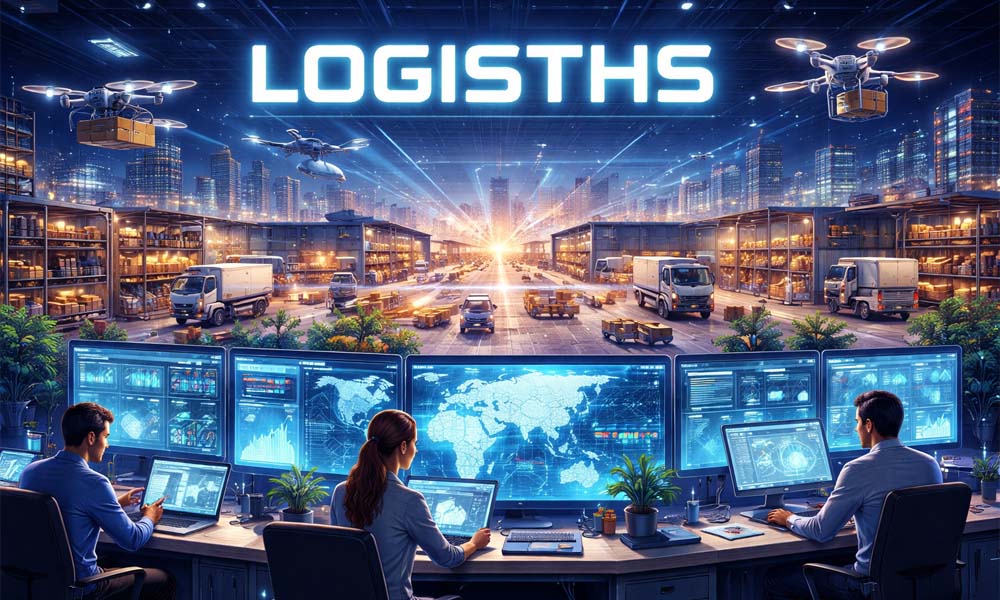
In an era where speed, efficiency, and precision define competitive advantage, the logistics industry is undergoing a profound transformation. At the center of this shift is an emerging concept known as logisths. While the term may appear unfamiliar, it represents a new way of thinking about logistics—one that blends data intelligence, automation, and strategic coordination into a unified system. For startup founders, entrepreneurs, and tech professionals, understanding logisths is becoming increasingly important as supply chains evolve into complex, technology-driven ecosystems.
The modern economy demands more than just moving goods from point A to point B. Businesses now require visibility, adaptability, and predictive capabilities. This is where logisths comes into play, offering a framework that reimagines logistics as a dynamic and intelligent network rather than a linear process.
Understanding Logisths in a Real-World Context
To fully appreciate the significance of logisths it helps to consider the challenges faced by today’s businesses. Globalization, e-commerce growth, and rising customer expectations have placed immense pressure on supply chains. Delays, inefficiencies, and lack of transparency can quickly translate into lost revenue and damaged reputations.
Logisths addresses these challenges by integrating advanced technologies such as data analytics, artificial intelligence, and real-time tracking into logistics operations. Instead of reacting to problems as they arise, businesses can anticipate disruptions and make informed decisions proactively.
For example, an e-commerce startup using a logisths-driven approach can monitor inventory levels, predict demand fluctuations, and optimize delivery routes in real time. This not only improves efficiency but also enhances the customer experience—a critical factor in today’s competitive market.
The Evolution from Traditional Logistics to Logisths
Traditional logistics systems were primarily focused on transportation and storage. While these functions remain essential, they are no longer sufficient on their own. The shift toward logisths reflects a broader transformation in how businesses view supply chain management.
In the past, logistics was often treated as a backend operation. Today, it is a strategic function that directly impacts customer satisfaction and business growth. Logisths elevates logistics to a central role by incorporating intelligence and connectivity into every stage of the process.
This evolution is driven by the need for agility. Markets are changing faster than ever, and businesses must be able to adapt quickly. By leveraging real-time data and predictive analytics, logisths enables organizations to respond to changes with speed and precision.
Why Logisths Matters for Startups and Tech Professionals
For startups, adopting a logisths approach can provide a significant competitive advantage. Unlike established companies with legacy systems, startups have the flexibility to build modern, technology-driven logistics frameworks from the ground up.
This flexibility allows them to implement innovative solutions such as automated warehouses, smart inventory systems, and AI-powered forecasting tools. As a result, they can operate more efficiently and scale more effectively.
Tech professionals also play a crucial role in this transformation. Developing and managing logisths systems requires expertise in data science, software engineering, and systems integration. This creates opportunities for innovation and career growth in a rapidly evolving field.
Moreover, logisths aligns closely with the broader trend of digital transformation. As businesses across industries embrace technology, the ability to integrate logistics with other functions—such as marketing, sales, and customer service—becomes increasingly valuable.
Core Components of a Logisths Framework
At its foundation, logisths is built on several key components that work together to create an intelligent logistics system.
One of the most important elements is data integration. By consolidating information from various sources, businesses can gain a comprehensive view of their operations. This enables better decision-making and improved coordination.
Another critical component is automation. From warehouse operations to transportation management, automation reduces manual effort and increases efficiency. It also minimizes errors, which can have significant financial implications.
Predictive analytics is another defining feature of logisths. By analyzing historical data and identifying patterns, businesses can forecast demand, optimize inventory levels, and anticipate potential disruptions.
Finally, real-time visibility ensures that all stakeholders have access to up-to-date information. This transparency is essential for maintaining trust and ensuring smooth operations.
Comparing Traditional Logistics and Logisths
To better understand the impact of this shift, consider the following comparison:
| Aspect | Traditional Logistics | Logisths Approach |
|---|---|---|
| Focus | Transportation and storage | End-to-end intelligence and optimization |
| Decision-Making | Reactive | Predictive and data-driven |
| Technology Use | Limited | Advanced and integrated |
| Visibility | Fragmented | Real-time and comprehensive |
| Scalability | Challenging | Flexible and scalable |
This comparison highlights how logisths transforms logistics from a functional necessity into a strategic advantage.
Practical Applications of Logisths
The principles of logisths can be applied across a wide range of industries. In e-commerce, it enables faster and more reliable deliveries. In manufacturing, it improves supply chain coordination and reduces downtime. In healthcare, it ensures the timely distribution of critical supplies.
For entrepreneurs, the practical implications are clear. By adopting a logisths approach, they can streamline operations, reduce costs, and enhance customer satisfaction. This not only improves profitability but also strengthens brand reputation.
One real-world example is the use of smart routing systems. By analyzing traffic patterns, weather conditions, and delivery schedules, these systems can determine the most efficient routes for transportation. This reduces fuel consumption, lowers costs, and improves delivery times.
Another application is inventory optimization. By using predictive analytics, businesses can maintain optimal stock levels, reducing the risk of overstocking or stockouts.
Challenges in Implementing Logisths
Despite its many advantages, implementing logisths is not without challenges. One of the primary obstacles is the complexity of integrating multiple technologies and systems. This requires careful planning and execution.
Data security is another concern. As logistics systems become more connected, they also become more vulnerable to cyber threats. Ensuring robust security measures is essential to protect sensitive information.
There is also the challenge of change management. Transitioning from traditional logistics to a logisths framework requires a shift in mindset and processes. Employees must be trained to adapt to new technologies and workflows.
However, these challenges can be overcome with the right strategy and resources. The long-term benefits of logisths far outweigh the initial difficulties.
The Future of Logisths in Digital Transformation
Looking ahead the role of logisths is expected to grow even more significant. As technologies such as artificial intelligence, the Internet of Things (IoT) and blockchain continue to evolve they will further enhance the capabilities of logistics systems.
For example, IoT devices can provide real-time data on the condition and location of goods, while blockchain can ensure transparency and security in supply chain transactions. These innovations will make logisths even more powerful and efficient.
Sustainability is another area where logisths can have a major impact. By optimizing routes and reducing waste, businesses can minimize their environmental footprint while maintaining high levels of performance.
For startups and tech professionals, this presents an exciting opportunity to shape the future of logistics. By embracing logisths, they can drive innovation and create solutions that meet the demands of a rapidly changing world.
Conclusion
Logisths represents a new frontier in logistics one that combines technology data and strategy to create intelligent and adaptive systems. It transforms logistics from a support function into a core driver of business success.
For entrepreneurs the message is clear: the future of logistics is not just about movement it’s about intelligence. By adopting a logisths approach, businesses can unlock new levels of efficiency scalability and customer satisfaction.
In a digital economy where every second counts those who embrace logisths will be better positioned to navigate complexity and seize opportunities. The journey may require investment and effort, but the rewards are well worth it.
-

 Blog2 months ago
HHKTHK: Decoding Digital Noise and Strategic Signals in Modern Tech
-

 Blog2 months ago
From Blog PlayBattleSquare: How Competitive Gaming Platforms Are Shaping the Future of Digital Communities
-

 Blog2 months ago
Lollitip: How Innovative Design is Transforming Consumer Experience
-

 Blog2 months ago
Simbramento: A New Strategic Model for Scalable Digital Growth
-

 Blog2 months ago
Calesshop: Redefining Digital Commerce for Modern Entrepreneurs
-

 Blog2 months ago
John Carbahal’s Son: Legacy, Leadership, and the Next Generation of Digital Entrepreneurship
-

 Blog2 months ago
Hygienstolar: The Strategic Framework Modern Startups Didn’t Know They Needed
-

 Blog2 months ago
Jernsenger: Why Iron Beds Are Making a Powerful Comeback in Modern Living